
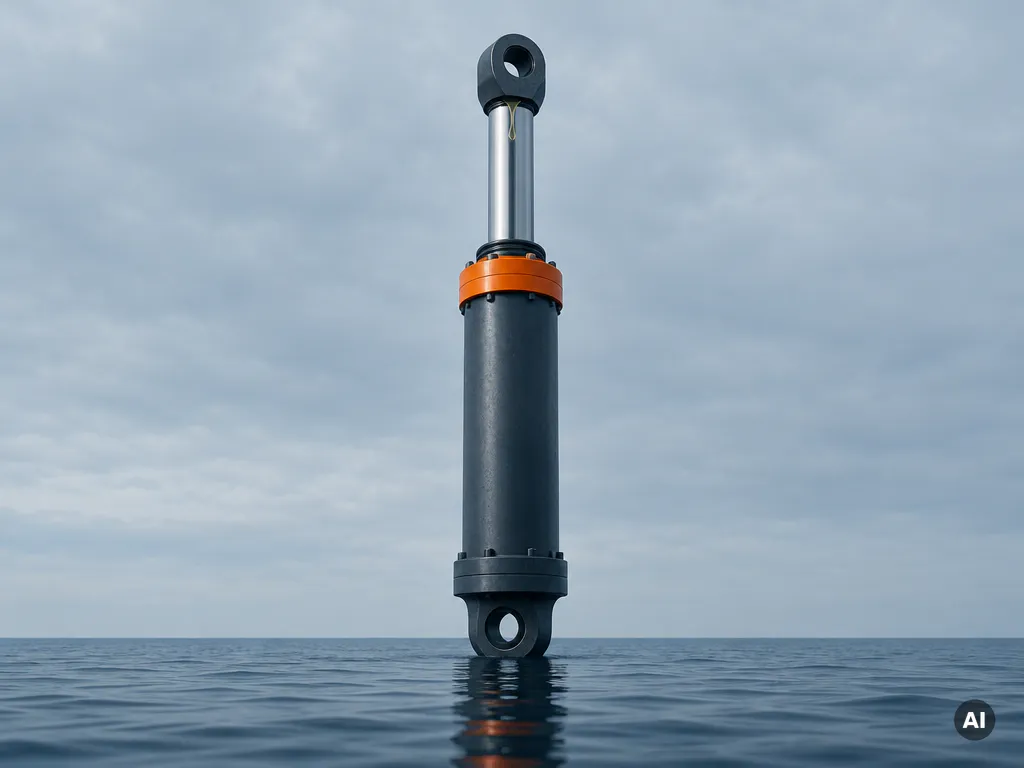
Heavy equipment at sea loses power because hydraulic energy leaks away through internal wear, contaminated fluid, heat and degraded seals long before a component fails outright. Salt, moisture and constant load cycling speed up every one of those mechanisms. This article answers the related questions offshore teams ask when offshore hydraulic systems, winches and grippers start to weaken.
What Causes Machinery to Lose Strength Under Heavy Load?
Machinery loses strength under heavy load mainly because hydraulic pressure or flow escapes before it reaches the actuator. The usual causes are worn pumps and motors, internal leakage across seals and valves, contaminated oil, overheating and incorrectly set relief or control valves.
Each cause lowers a different part of the power equation. Pressure determines force, and flow determines speed. A worn pump delivers less flow at the same speed, so a hydraulic winch slows down under load. A leaking cylinder piston seal lets the load creep, because oil bypasses the piston instead of holding pressure. A relief valve that opens too early dumps flow to the tank and caps the available force.
Heat links most of these problems. Internal leakage converts hydraulic energy into heat, which thins the oil, which increases leakage further. This feedback loop explains why a system that “feels a little weak” in the morning can struggle badly at the end of a long lifting or pulling operation.
Typical weak points on offshore equipment include:
- Pump and motor wear: lower volumetric efficiency, more case drain flow and higher oil temperature.
- Valve wear and contamination: sticking spools, unstable pressure control and slow response.
- Cylinder seal wear: drift under load and reduced holding force, for example on a monopile gripper.
- Cavitation and aeration: air or vapour in the oil causes noise, erratic motion and rapid damage to pumps.
Why Does Salt Water Make Power Problems Worse?
Salt water makes hydraulic power problems worse because it attacks the parts of the system that keep oil clean and sealed. Salt spray corrodes piston rods, fittings and enclosures, while moisture enters the oil through seals and breathers. Water in hydraulic oil reduces lubrication and accelerates wear.
Corrosion on a piston rod creates pits that act like a file against the rod seal. Once the seal starts to leak, oil escapes and moisture and salt can enter the system. Corroded fittings and hose ends can loosen or weep, and electrical connectors on sensors and valve coils can fail, which makes the control side of a hydraulic system look like a power problem.
Temperature swings add to the damage. Warm oil in a hydraulic power unit that cools overnight draws humid air through the breather, and condensation forms inside the tank. Over time this water breaks down additives, promotes rust and encourages microbial growth. Offshore teams therefore treat desiccant breathers, sealed reservoirs, rod protection and corrosion-resistant coatings as part of the performance of the system, not as cosmetic details.
How Can You Tell Where the Power Is Being Lost?
You find where power is being lost by comparing measured values with the commissioning baseline: pressure, flow, speed, oil temperature and case drain flow. Whichever value drifts first points to the failing component. Structured measurements beat guessing and prevent you from replacing parts that still work.
A practical sequence for offshore hydraulic troubleshooting:
- Check the symptom pattern. Slow movement points to flow loss. Weak force points to pressure loss. Drift under load points to cylinder or valve leakage.
- Read pressure and temperature. Compare system pressure, relief setting and tank temperature with the baseline. A steady temperature climb signals internal leakage.
- Measure case drain flow. Rising case drain flow on a pump or motor shows internal wear.
- Test the oil. Particle count, water content and viscosity show whether contamination drives the problem. Fluid filtration and condition monitoring turn this into a routine check instead of a reaction to failure.
- Isolate the circuit. Block sections one at a time to see where pressure holds and where it drops.
For a constant tension winch, also check how well the control loop holds tension. Poor valve response or a sensor fault produces swings in line tension that resemble weak hydraulic power. The table below links common symptoms to likely causes.
| Symptom | Likely cause | First check |
|---|---|---|
| Slow movement under load | Worn pump or motor, low flow | Flow and case drain flow |
| Weak force or low pressure | Relief valve setting, internal leakage | System pressure at the relief valve |
| Load drifts or creeps | Cylinder seal or valve leakage | Pressure hold test |
| High oil temperature | Internal leakage, cooler fouling | Temperature trend and cooler condition |
| Erratic or jerky movement | Air in oil, contamination, valve sticking | Oil sample and suction line |
Is It Better to Repair or Replace Weakening Equipment?
Repair or overhaul is usually the better choice when the housing, shafts and structure remain sound and wear is confined to replaceable parts such as seals, bearings and valve plates. Replacement makes sense when damage is structural, parts are obsolete or repair cost approaches the price of a new unit.
Weigh these criteria:
- Condition of the core components: a scored pump housing or cracked cylinder barrel favours replacement. Worn seals and bearings favour overhaul.
- Downtime and lead time: on a vessel or platform, a rapid overhaul can beat a long wait for a new component.
- Total cost of ownership: include installation, commissioning and the risk of repeat failure, not only purchase price.
- Cause of failure: if contamination or heat caused the damage, fix that cause first. A new pump in a dirty system fails again.
- Upgrade opportunity: replacement sometimes allows better filtration, cooling or monitoring to be added.
Cylinders, pumps and motors are well suited to professional overhaul, while flushing the piping before restart protects the repaired parts. For help with the broader maintenance picture, see our overview of MRO for hydraulic systems.
How Can Power Loss at Sea Be Prevented?
Power loss at sea is prevented by keeping the oil clean, dry and cool, protecting components from corrosion and monitoring system condition so that wear is found early. Good design and a planned maintenance routine matter more than reacting to breakdowns offshore.
Effective measures include:
- Fluid cleanliness: use properly rated filtration, on the return line and offline, and sample the oil at set intervals.
- Moisture control: fit desiccant breathers, check seals and drain condensation from tanks.
- Thermal management: keep coolers clean and size them for peak duty, not average duty.
- Corrosion protection: specify coated or corrosion-resistant rods, stainless fittings and sealed enclosures.
- Condition monitoring: log pressure, temperature and case drain flow so trends show up before failure.
- Clean installation and flushing: flush new and repaired piping to a defined cleanliness level before commissioning.
- Spares and service plan: keep critical seals, filters and a spare hydraulic power pack or key components available for the offshore campaign.
Prevention starts at the design stage. A well-engineered drive with correct sizing, accessible test points and the right control strategy is easier to keep healthy. This is especially true for complete hydraulische aandrijf- en besturingssystemen that combine the power unit, actuators and controls. Projects in wind installation benefit from hydraulic systems for offshore wind designed around the specific loads of lifting, gripping and heave compensation.
Hoe HYCOM hydraulische systemen voor offshore toepassingen ondersteunt
Wij ontwerpen, bouwen en onderhouden hydraulische systemen voor offshore toepassingen, van zelfheffende platforms en heave-compensatiesystemen tot speciale lieren. Zo sluiten onze diensten aan op de vermogensverliezen uit dit artikel:
- Engineering en ontwikkeling van hydraulische aandrijf- en besturingssystemen voor offshore en offshore wind.
- Ontwerp en productie van hydraulische power units en maatwerkoplossingen, zoals lieren en hefsystemen.
- Onderhoud, revisie en reparatie van hydraulische cilinders, pompen, motoren en leidingwerk.
- Optimalisatie van betrouwbaarheid, operationele prestaties en levensduur van bestaande installaties.
- Technische ondersteuning, installatie, inbedrijfstelling en service.
Wil je de betrouwbaarheid van je hydraulische systemen verbeteren, ongeplande stilstand beperken of een nieuwe hydraulische installatie ontwikkelen? Ontdek welke technische oplossingen en diensten aansluiten op jouw toepassing, zoals revisie van hydraulische pompen en motoren. We denken graag met je mee over een passende aanpak voor jouw project. Neem contact op voor technisch advies of een projectbespreking en bespreek jouw hydraulische uitdaging met onze specialisten.