
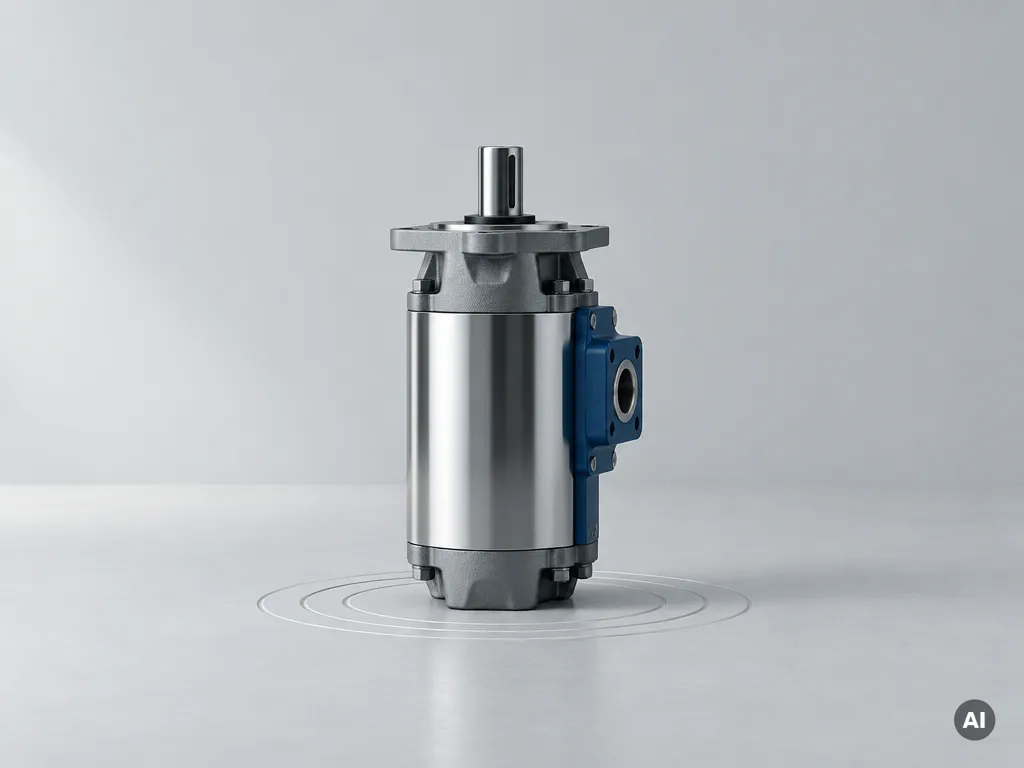
A whining noise from a machine usually signals a high-pitched vibration caused by fluid, air or friction under stress. In hydraulic equipment, the most common sources are air or cavitation at the pump inlet, a clogged suction strainer or filter, worn bearings and excessive pressure drop across a valve. The sound is a symptom, not a diagnosis, so the pitch, timing and load dependency tell you where to look. Below, we answer the most common questions about whining hydraulic systems and what to do next.
What Usually Causes a Machine to Whine?
The most common cause of a whining hydraulic machine is pump cavitation or aeration, where the pump draws in vapor bubbles or air instead of a full flow of oil. Other typical causes include a restricted suction line, degraded oil, worn pump or motor bearings, and valves or relief settings that create high-velocity flow.
In practice, the causes fall into a few groups:
- Cavitation: a blocked suction strainer, an undersized suction line, an oil viscosity that is too high at low temperature or a reservoir level that is too low starves the pump inlet.
- Aeration: loose suction fittings, a worn shaft seal or return lines that discharge above the oil level let air enter the fluid.
- Mechanical wear: worn pump bearings, a damaged gear set or piston group, or a misaligned coupling produce a steady, pitch-rising whine.
- Flow and pressure effects: relief valves at the edge of their setting, partly closed flow controls and undersized hydraulic piping generate a hiss or whistle under load.
- Fluid condition: contaminated, oxidized or foamy oil reduces lubrication and increases noise. Regular hydraulische olie filteren (hydraulic oil filtration) keeps particles and water below damaging levels.
Is a Whining Noise Always a Sign of Damage?
No, a whining noise does not always mean damage has occurred, but it always means the system operates outside its normal condition. A short whine on a cold start can come from thick oil and clear as the temperature rises. A persistent whine that gets louder or changes with load usually points to a developing fault.
Some noise is operational. Many pumps and hydraulic power units (HPU) have a characteristic sound at specific speeds and pressures, and electric motors with frequency drives can add tonal noise. What matters is change. A sound that is new, louder or higher pitched than your baseline deserves attention, even if the machine still performs normally.
Whining that is harmless in origin can still become harmful if left alone. Cavitation, for instance, starts as a noise problem and ends as pitting on pump components. This is why we recommend recording a baseline sound and vibration profile for critical installations as part of condition monitoring.
How Can You Tell Where the Whining Comes From?
You locate the source of a whine by checking when it occurs, how it changes with load, speed and temperature, and where it is loudest. A whine that starts at pump start-up and varies with speed points to the pump or its suction side. A whine that appears only when a function is actuated points to a valve, cylinder circuit or motor.
Use a structured approach rather than guessing:
- Check the basics first: oil level, oil temperature and the condition of the suction strainer and filter indicators.
- Listen by operating condition: note whether the noise changes at idle, under pressure, during a specific movement or after warm-up.
- Inspect for air entry: look for foam in the reservoir, milky or cloudy oil and weeping suction connections.
- Isolate sections: unload the pump or shut off individual circuits where this is safe to see which section removes the noise.
- Measure: pressure, flow, case drain flow and bearing vibration give objective data that a trained ear cannot.
For complex installations, such as winch systems or active heave compensation on offshore vessels, the same logic applies, but interactions between pumps, accumulators and control valves make specialist analysis more efficient than trial and error.
What Happens If You Ignore a Whining Machine?
Ignoring a whining machine allows the underlying fault to progress, typically leading to component wear, contaminated oil, rising temperatures and eventually unplanned downtime. Cavitation erodes pump surfaces, worn bearings release metal particles, and these particles damage valves, hydraulic cylinders and seals throughout the system.
The damage spreads in a predictable sequence. First, the pump loses volumetric efficiency, so the system works harder for the same output. Heat rises, which thins the oil and accelerates seal degradation. Then wear particles circulate, scoring cylinder rods and valve spools. At that stage you are no longer looking at a simple fix, but at a possible hydraulische pomp revisie (hydraulic pump overhaul), cylinder repair and a full system flush.
Leaks follow as well. Damaged seals and overheated hoses lead to hydrauliek lekkage (hydraulic leakage), which brings environmental risk and, offshore or in dredging, can create reportable incidents. The cost difference between an early inspection and an emergency repair on a critical asset is usually significant, especially when it involves vessel or installation downtime.
Should You Keep Running a Machine That Whines?
You should stop a machine that whines loudly, whines with rising pitch, or shows pressure loss, overheating or foaming oil, and you may continue short-term only if the noise is mild, stable and your inspection shows no other symptoms. When in doubt, reduce load and investigate before the next operating cycle.
Use these criteria to decide:
- Stop immediately if the noise comes with a sudden loss of speed or force, an oil temperature above the specified limit, visible oil leaks or metallic debris in the filter.
- Continue with care if the noise is stable, disappears after warm-up and filters, oil level and temperature are all in order. Schedule an inspection soon.
- Escalate if the machine is safety critical, such as lifting equipment, jack-up systems or bridge and lock drives. For these applications, a failure carries safety consequences, not only cost.
Planned hydrauliek onderhoud (hydraulic maintenance) during a convenient window is almost always cheaper than a breakdown at sea, in a lock or on a dredger mid-campaign. Our MRO capabilities are built around exactly this planned approach.
Why Do Whining Noises Keep Coming Back After a Fix?
A whining noise returns after a repair when the root cause was not removed, which usually means the symptom was treated instead of the system condition. Replacing a worn pump without finding out why it wore, for example, leads to the same failure again.
The typical reasons for recurrence are:
- Remaining contamination: if the system was not flushed after a pump or cylinder failure, residual particles damage the new component. Proper flushing and fluid filtration protect your investment.
- Suction side problems left unsolved: an undersized suction line, a restricted strainer or a poorly routed return line keeps causing cavitation or aeration.
- Wrong oil or oil condition: viscosity, water content or additive depletion that no longer fits the operating temperature range.
- Design or settings issues: a relief valve set too close to working pressure, or flow velocities that are too high for the pipe diameter.
- Mounting and alignment: a pump and motor coupling that is slightly off creates bearing loads that bring back the noise within weeks.
A good hydraulisch systeem reparatie (hydraulic system repair) therefore combines component work, such as hydraulische cilinder reparatie or pump and motor overhaul, with root cause analysis, oil sampling and a check of the complete circuit. Working this way lowers repeat failures and improves the total cost of ownership of the installation. Our hydraulische aandrijf- en besturingssystemen are engineered with these suction and flow conditions in mind, so noise problems are addressed at the design stage as well as in service.
Hoe HYCOM helpt bij het oplossen van hydraulische geluidsproblemen
Wij combineren engineering, productie en werkplaatsservice, zodat je met één partner van diagnose tot oplossing komt. Voor machines die janken of fluiten ondersteunen we je onder meer met:
- Storingsanalyse en inspectie van hydraulische systemen, inclusief het beoordelen van zuigzijde, filtratie en oliecondities.
- Revisie en reparatie van hydraulische pompen, motoren en cilinders.
- Hydraulisch leidingwerk, spoelen en filtratie om vervuiling na een storing te verwijderen.
- Ontwerp en productie van hydraulic power units en maatwerkoplossingen met een lage geluidsproductie en betrouwbare zuigcondities.
- Technische ondersteuning, installatie, inbedrijfstelling en service voor offshore, civiele werken, baggeren en industriële toepassingen.
Wil je de betrouwbaarheid van je hydraulische systemen verbeteren, ongeplande stilstand beperken of een nieuwe hydraulische installatie ontwikkelen? Ontdek welke technische oplossingen en diensten aansluiten op jouw toepassing, zoals revisie van hydraulische pompen en motoren. We denken graag met je mee over een passende aanpak voor jouw project. Hoor je een nieuw geluid in je installatie of wil je een storing structureel oplossen? Bespreek jouw hydraulische uitdaging met onze specialisten en plan een technisch adviesgesprek of projectbespreking.