
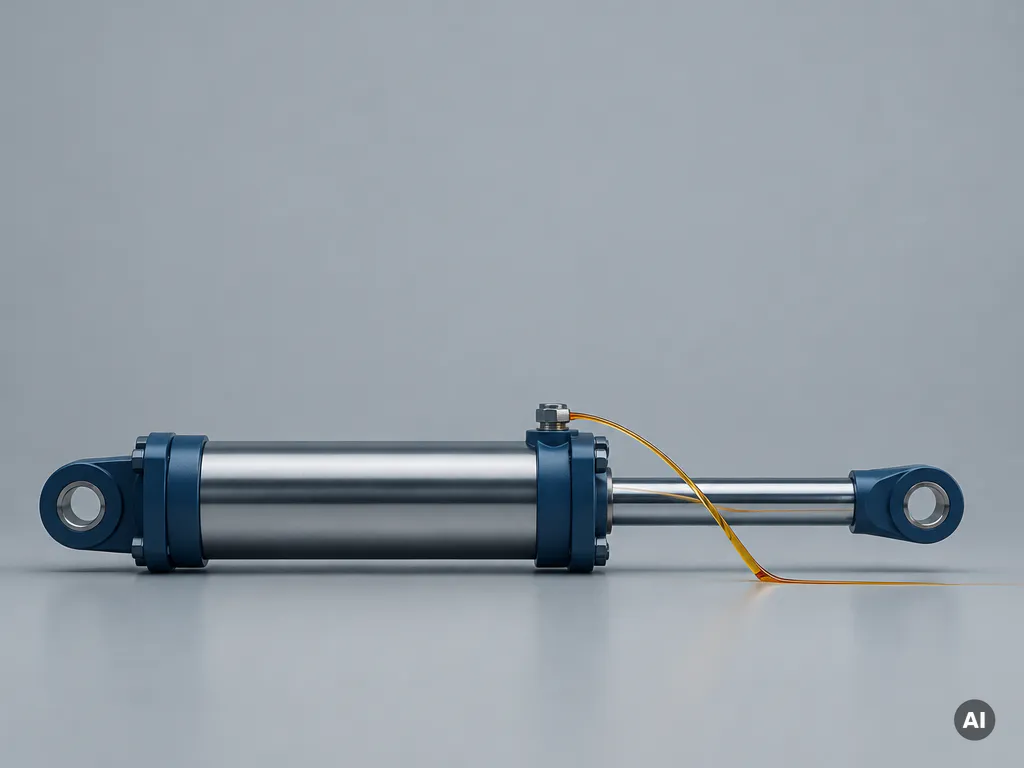
Sudden jerky movements in heavy machinery usually come from air or contaminated oil in the hydraulic circuit, worn components, or faults in the control system. These causes disturb the steady flow and pressure that smooth motion depends on. The pattern of the jerking points to the cause, so the questions below help you narrow it down.
Why Does a Machine Jerk Only Under Load?
A machine that jerks only under load usually has a component that cannot hold pressure or deliver flow when demand rises. Typical causes are internal leakage in a pump or cylinder, a worn relief or counterbalance valve, or insufficient pump capacity. The fault stays hidden at light load and shows up as soon as pressure builds.
Under load, the system has to hold higher pressure while moving the same volume of oil. Any internal bypass then leaks more oil, and the actuator speed drops, recovers, and drops again. You see this as stop-start motion on winches, heave compensation cylinders, bridge drives, or dredging equipment.
Check these points first when the jerking appears only under load:
- Pump wear: a worn pump loses volumetric efficiency under pressure, so flow falls exactly when you need it.
- Counterbalance or load-holding valves: incorrectly set or contaminated valves open and close erratically while lowering a load.
- Cylinder seals: worn piston seals let oil pass internally, which causes drift and uneven movement.
- Relief valve setting: a relief valve that opens early dumps flow to tank and starves the actuator.
How Can Air or Dirty Oil Cause Jerking?
Air in the oil makes the fluid compressible, so the actuator moves in irregular steps instead of a steady stroke. Dirty oil causes jerking in a different way: particles make valve spools stick, then release. Both problems disturb flow control and show up as hesitation, surging, or sudden jumps.
Air enters through low oil levels, leaking suction lines, loose fittings, worn shaft seals, or poorly bled systems after maintenance. Warning signs include foamy or milky oil, a whining pump, and spongy actuator response. Air also speeds up oil oxidation and cavitation damage, so a small intake leak can turn into pump failure.
Contamination works more slowly but just as reliably. Particles cause spools in proportional and servo valves to stick, and the sticking spool releases with a jump. Water and aged oil also change viscosity and lubricity. Regular hydraulic oil filtering, fluid sampling, and condition monitoring help you catch this before it damages pumps and valves. After a repair or component change, proper flushing removes the residue that otherwise restarts the problem.
What’s the Difference Between Jerking, Shaking, and Stuttering?
Jerking is a single, sudden step in movement, shaking is a fast repeated vibration, and stuttering is a rhythmic stop-start pattern during motion. Each symptom points to a different fault family, so describing the pattern accurately saves diagnostic time.
- Jerking: sudden, irregular steps. Think air in the system, a sticking valve spool, or an intermittent control signal.
- Shaking or vibration: fast, repeating oscillation. Think cavitation, a worn or unbalanced pump or motor, loose mountings, or an unstable control loop.
- Stuttering: regular stop-start motion at low speed. Think stick-slip friction in cylinders, worn guides, low-pressure supply, or insufficient flow at low demand.
Note when the symptom occurs: at start-up, at low speed, at high speed, during direction changes, or only when warm. A fault that disappears when the oil heats up often points to viscosity or air problems. A fault that appears only when warm often points to internal wear.
Can Worn Parts or Control Faults Be to Blame?
Yes. Worn hydraulic components and control faults are two of the most common causes of jerky movement. Worn pumps, motors, cylinders, and valves create internal leakage and unstable flow, while faulty sensors, wiring, or poorly tuned controllers send inconsistent commands to otherwise healthy hardware.
Mechanical wear
Worn pump and motor components cause pulsating flow and falling efficiency. Cylinder rods and seals that are scored or worn cause stick-slip and internal bypass. Sticking or eroded valve spools meter oil unevenly. A hydraulic pump overhaul or hydraulic cylinder overhaul restores clearances and sealing, which is usually more economical than replacing the complete unit.
Control and electronics faults
In modern hydraulische aandrijf- en besturingssystemen, proportional or servo valves follow an electronic command. A noisy feedback signal, damaged cable, loose connector, or incorrectly tuned control loop makes the valve hunt around its setpoint. The result looks like a mechanical problem but disappears when you fix the signal. Check calibration, grounding, and sensor feedback before you replace expensive hydraulic parts.
How Do You Find the Cause Step by Step?
Start with the simplest and cheapest checks, then move toward measurement and component testing. Work through oil condition, leaks, and air first, then pressure and flow, then the control system. This sequence prevents unnecessary part replacement and shortens downtime.
- Define the symptom. Record when it happens: load, speed, temperature, direction, and which function.
- Check oil level and condition. Look for foam, discoloration, water, and a burnt smell. Take an oil sample for particle count and water content.
- Inspect the suction side. Check hoses, fittings, filters, and shaft seals for air ingress and restriction.
- Measure pressure and flow. Compare pump output and system pressure against specification and look for instability.
- Test valves and actuators. Check relief and counterbalance settings, spool movement, and cylinder internal leakage.
- Verify the control signal. Inspect sensors, cabling, and controller output with the machine running.
- Confirm after repair. Flush if needed, bleed the system, and test under load.
For offshore, dredging, and civil works installations, structured hydraulic maintenance with condition monitoring helps you spot trends before they turn into jerky motion. Details on onderhoud en revisie van hydraulische systemen show how planned service reduces unplanned downtime.
When Is Jerky Movement a Safety Risk?
Jerky movement becomes a safety risk whenever uncontrolled motion can affect a suspended load, a person, or structural integrity. Examples are lifting operations, winches, active heave compensation, and bridge or lock drives. Stop operation and investigate when jerking appears in any load-bearing or personnel-critical function.
Specific warning situations include:
- Sudden drops or surges while lowering a suspended load, which can indicate counterbalance valve failure.
- Jerking combined with pressure spikes, which can burst hoses or damage fittings.
- Visible oil leaks near a moving actuator, which add fire and slip hazards and signal wear.
- Erratic movement of equipment near people, vessels, or offshore structures.
Even when jerking looks like a comfort or efficiency issue, it often accelerates fatigue in structures, hoses, and seals. Treat it as an early warning and not as normal behavior. Quick diagnosis lowers both the safety risk and the repair cost, because a small valve or seal repair costs far less than a failed pump or cylinder.
Hoe HYCOM helpt bij het onderhoud van hydraulische installaties
Wij ondersteunen je bij het opsporen en oplossen van hydraulische storingen, van de eerste diagnose tot revisie en herinbedrijfstelling. Onze ervaring in offshore, baggeren, civiele werken en industrie helpt je om schokkerige bewegingen snel terug te voeren op de werkelijke oorzaak.
- Onderhoud, revisie en reparatie van hydraulische cilinders, pompen, motoren en hydraulisch leidingwerk.
- Engineering en ontwikkeling van hydraulische aandrijf- en besturingssystemen, inclusief elektronische regelsystemen.
- Ontwerp en productie van hydraulic power units en maatwerkoplossingen.
- Spoelen en filtreren van hydraulische systemen na reparatie of bij vervuilde olie.
- Technische ondersteuning, installatie, inbedrijfstelling en service op locatie.
Wil je de betrouwbaarheid van je hydraulische systemen verbeteren, ongeplande stilstand beperken of een nieuwe hydraulische installatie ontwikkelen? Ontdek welke technische oplossingen en diensten aansluiten op jouw toepassing, zoals de hydraulische spoel- en filtratieoplossingen die we leveren. We denken graag met je mee over een passende aanpak voor jouw project. Neem contact op en bespreek jouw hydraulische uitdaging met onze specialisten voor technisch advies of een projectbespreking.