
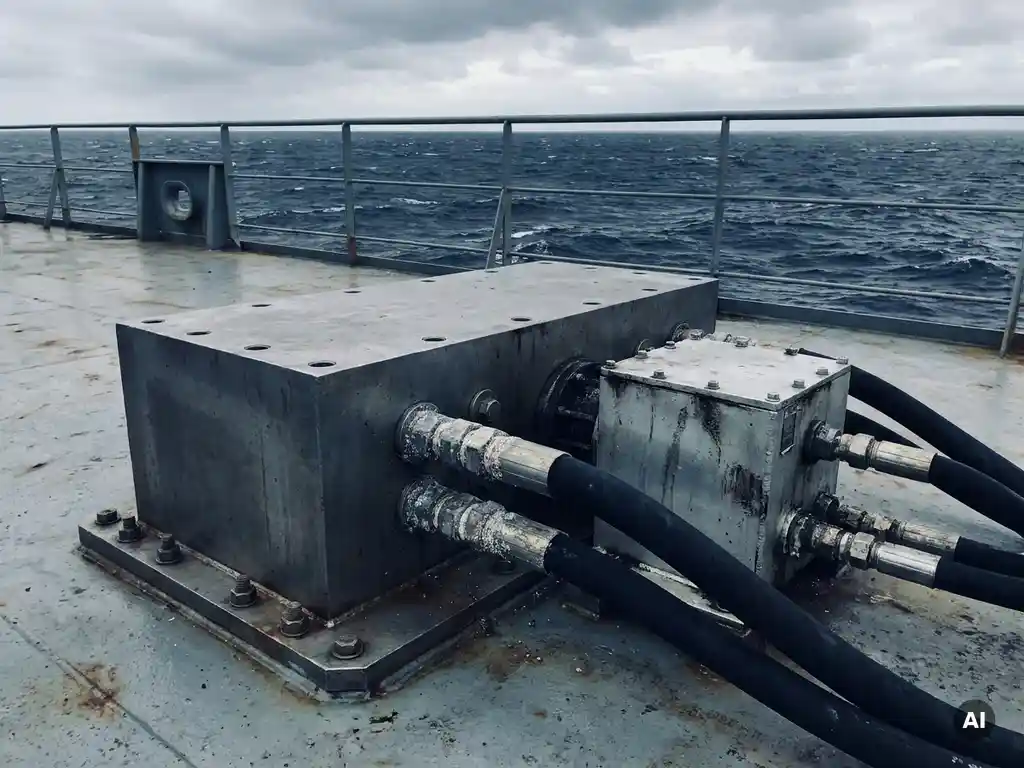
You keep marine hydraulic systems running in harsh conditions by combining the right material selection, proactive contamination control, and structured maintenance intervals adapted to the offshore environment. Saltwater, temperature swings, vibration, and constant mechanical load create failure conditions that standard land-based maintenance schedules simply cannot address. The questions below cover the specific threats, protective measures, and decision points that maintenance engineers and asset managers need to manage hydraulic systems for offshore applications reliably over the long term.
What makes marine environments so damaging to hydraulic systems?
Marine environments damage hydraulic systems through a combination of saltwater exposure, humidity, mechanical vibration, and wide temperature variation that accelerates corrosion, degrades seals, and promotes internal contamination at a rate far higher than in protected industrial settings. Offshore platforms, dredging vessels, and marine construction equipment face all of these stressors simultaneously and continuously.
Saltwater is the most aggressive factor. It attacks exposed metal surfaces, corrodes fittings and cylinder rods, and degrades external coatings quickly. But the damage does not stop at the surface. On working vessels, vibration from propulsion systems, wave impact, and mechanical loads loosens connections and fatigues hydraulic piping over time. This creates micro-leaks that allow moisture and contamination to enter the system.
Temperature variation adds another layer of stress. In offshore wind applications, a hydraulic power unit may operate in near-freezing North Sea conditions before warming up under full load. This thermal cycling affects fluid viscosity, seal elasticity, and the dimensional tolerances of hydraulic components. Systems that are not engineered for this range will show accelerated wear and unpredictable performance.
How does saltwater contamination affect hydraulic fluid and components?
Saltwater contamination in hydraulic fluid causes emulsification, accelerates corrosion of internal metal surfaces, promotes bacterial growth, and reduces the lubricating properties of the fluid. Even small concentrations of water, measured in hundreds of parts per million, can begin damaging pump internals, valve seats, and cylinder walls.
When water enters the hydraulic circuit, it does not simply mix with the oil. In most mineral-based hydraulic fluids, water separates or forms an emulsion depending on the fluid additive package. Emulsified fluid loses its ability to maintain a consistent oil film on moving surfaces, which increases wear rates on pumps, motors, and control valves. Free water settles in low points of the circuit and causes rust on internal surfaces that are not protected by the fluid’s additive package.
Salt compounds intensify this effect. Chloride ions accelerate pitting corrosion on stainless and carbon steel components, particularly in areas where protective coatings have been worn or scratched. In hydraulic cylinders, pitting on rod surfaces damages rod seals on every stroke, which leads to external leakage and progressive seal degradation. Fluid analysis, including water content measurement and particle counting, is the most reliable way to detect saltwater ingress before it causes component failure.
What sealing and material choices protect marine hydraulic systems?
Marine hydraulic systems should use corrosion-resistant materials such as stainless steel or duplex steel for exposed components, HNBR or PTFE-based seals for chemical and temperature resistance, and protective coatings on cylinder rods and housings. These choices directly extend service life in saltwater-exposed environments.
Material selection for structural and wetted components
Cylinder barrels, manifold blocks, and piping that are exposed to seawater or salt spray should be specified in stainless steel or duplex alloys rather than standard carbon steel. For hydraulic power units installed in enclosed machinery spaces, the risk of direct saltwater contact is lower, but humidity and condensation still make corrosion-resistant coatings and surface treatments worthwhile. Aluminium alloys are used in some offshore applications for weight reduction, but they require careful attention to galvanic corrosion where they contact steel or copper alloy components.
Seal and wiper selection
Standard NBR seals perform adequately in controlled conditions, but marine hydraulic systems benefit from HNBR or polyurethane seals that maintain elasticity across a wider temperature range and resist degradation from water and aggressive hydraulic fluids. Rod wipers are particularly important in marine applications because they are the first line of defence against salt, sand, and debris entering the cylinder. Selecting high-quality wiper profiles and replacing them at defined intervals prevents abrasive contamination from reaching the primary rod seal.
How often should hydraulic systems be serviced in marine applications?
Marine hydraulic systems typically require more frequent service intervals than equivalent land-based systems. Fluid analysis should be performed every 500 to 1,000 operating hours or at least every six months. Seal inspections, filter replacements, and visual checks of exposed components should follow a structured schedule based on operating conditions and the criticality of the system.
Fixed calendar intervals are not always the most effective approach. Condition-based maintenance, supported by regular fluid analysis and condition monitoring of key parameters such as operating temperature, pressure stability, and filter differential pressure, allows maintenance teams to act on actual system condition rather than elapsed time. This reduces unnecessary downtime while preventing the kind of undetected degradation that leads to unplanned failures at sea.
For active heave compensation systems, hydraulic winches, and other continuously loaded systems in offshore environments, more frequent inspection of high-cycle components is appropriate. Seals, accumulators, and valve blocks in these systems accumulate wear faster than in intermittently operated equipment. A structured maintenance plan that distinguishes between high-cycle and low-cycle components within the same hydraulic circuit is more effective than applying a single interval across the entire system.
The hydraulische aandrijf- en besturingssystemen used in dredging and offshore applications are designed with serviceability in mind, but regular attention to fluid quality and mechanical condition remains the most direct way to protect the investment and maintain operational availability.
What are the warning signs of hydraulic failure on a vessel or offshore platform?
The most common warning signs of hydraulic failure in marine applications are increased cycle times, abnormal operating temperatures, rising filter differential pressure, external leakage, unusual noise from pumps or motors, and pressure instability. Any one of these symptoms warrants immediate investigation to prevent a minor fault from becoming a system failure.
Increased cycle times in a hydraulic actuator or winch often indicate internal leakage across worn seals or valve seats. The system is still functioning, but fluid is bypassing the intended flow path, which reduces force output and efficiency. Left unaddressed, this internal leakage accelerates component wear and increases fluid temperature.
Abnormal operating temperature is a particularly important indicator in marine systems. If the hydraulic fluid temperature rises above its normal operating range without a corresponding increase in load, it suggests either a cooling system problem, increased internal leakage generating heat, or fluid degradation reducing the fluid’s thermal capacity. On offshore platforms where cooling water is drawn from the sea, blocked heat exchangers are a common cause of overheating that is straightforward to address if caught early.
Unusual noise from hydraulic pumps, specifically cavitation sounds or knocking, indicates either insufficient fluid supply to the pump inlet or air ingestion. Both conditions cause rapid pump wear and should be treated as urgent. Pressure instability, visible as erratic gauge readings or inconsistent actuator behaviour, points to worn control valves, accumulator faults, or contamination affecting valve spool movement.
When should a marine hydraulic system be overhauled rather than repaired?
A marine hydraulic system should be overhauled rather than repaired when multiple components show wear simultaneously, when recurring failures indicate systemic degradation rather than isolated faults, or when the total cost of repeated repairs over a maintenance cycle approaches the cost of a full overhaul. Repeated seal failures, persistent fluid contamination, and declining system efficiency are the clearest indicators that targeted repairs are no longer sufficient.
The distinction between repair and overhaul comes down to whether the root cause of failure has been addressed. Replacing a single failed seal or pump resolves the immediate symptom, but if the underlying cause is contaminated fluid, worn internal surfaces throughout the circuit, or an undersized filtration system, the replacement component will fail again on the same timeline. An overhaul addresses the system as a whole: flushing and replacing fluid, inspecting and reconditioning all major components, and verifying that the system meets its original performance specification.
For hydraulic cylinders in marine service, overhaul typically involves replacing all seals and wipers, inspecting the rod and barrel for corrosion or scoring, and repairing surface defects before reassembly. Pump and motor overhaul covers internal clearances, bearing condition, and valve plate wear. A complete system overhaul also includes pressure testing, flushing to achieve the required cleanliness level, and functional testing before return to service. Scheduling overhauls during planned maintenance stops or drydocking periods avoids unplanned operational interruptions.
How we support marine and offshore hydraulic systems
We design, build, and maintain complete hydraulic systems for some of the most demanding marine and offshore applications in the world, including dredging vessels, self-elevating platforms, offshore wind installation equipment, and active heave compensation systems.
- Engineering and development of hydraulic drive and control systems for offshore and marine applications, including hydraulic power units, winch systems, and motion compensation systems.
- Design and production of offshore hydraulic power units and custom solutions built to withstand saltwater exposure, vibration, and continuous operational loads.
- Maintenance, overhaul, and repair of hydraulic cylinders, pumps, motors, and complete hydraulic systems, including cylinder reconditioning and pump and motor overhaul.
- Reliability and performance optimisation through condition monitoring, fluid analysis programmes, and structured maintenance planning for marine assets.
- Technical support, installation, commissioning, and on-site service across our network of facilities and field service teams.
Wil je de betrouwbaarheid van je hydraulische systemen verbeteren, ongeplande stilstand beperken of een nieuwe hydraulische installatie ontwikkelen? Ontdek welke technische oplossingen en diensten aansluiten op jouw toepassing. We denken graag met je mee over een passende aanpak voor jouw project. Lees meer over revisie van hydraulische pompen en motoren of bespreek jouw hydraulische uitdaging met onze specialisten.