
Offshore wind does not always produce energy at the moments when onshore demand is highest. That is why we are contributing to an innovative pilot installation for sustainable offshore energy storage.
The system design was developed by our partner FLASC, who created a hydro‑pneumatic storage concept that uses water pressure and compressed air to temporarily store clean energy and release it when needed.
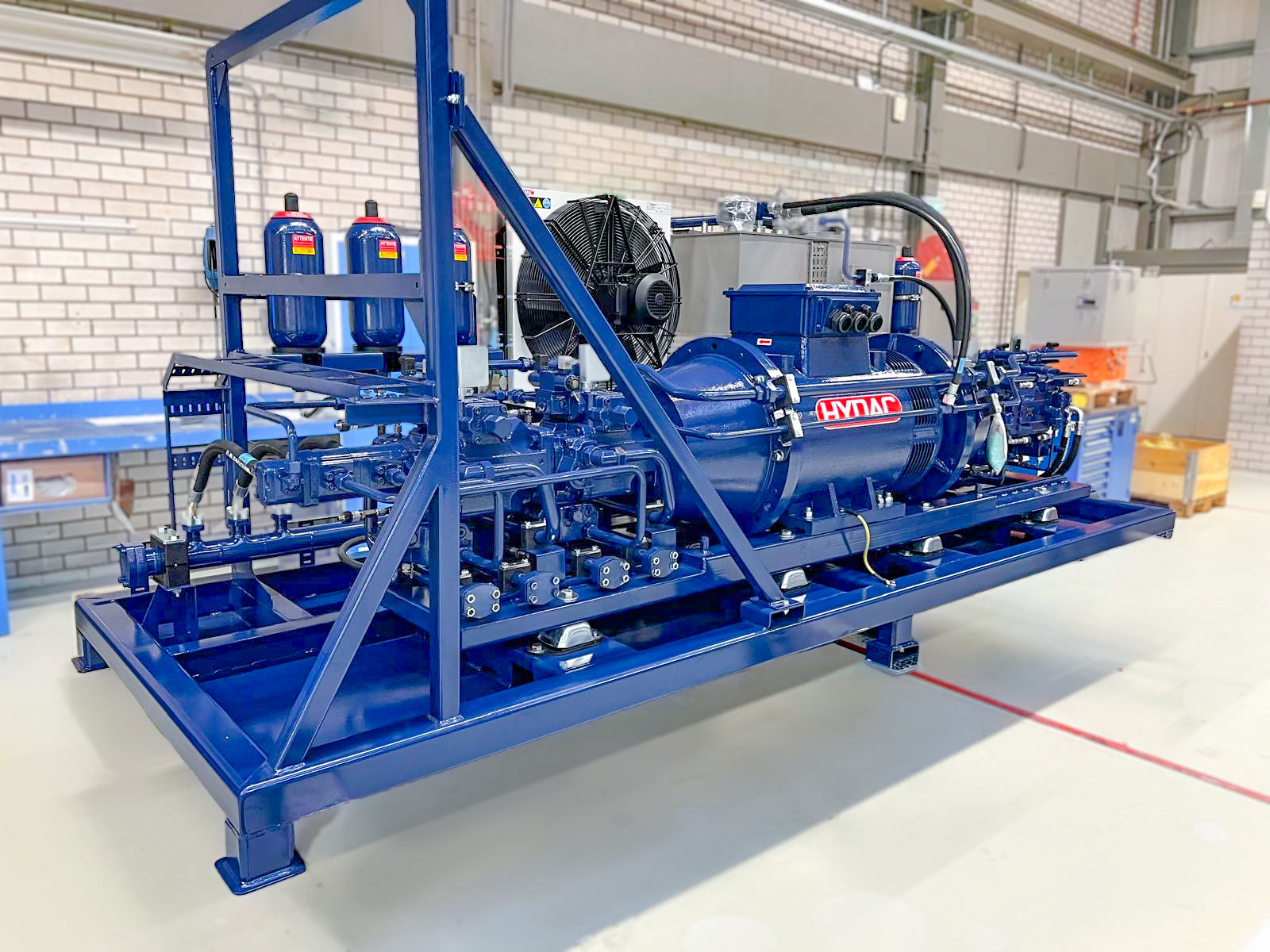
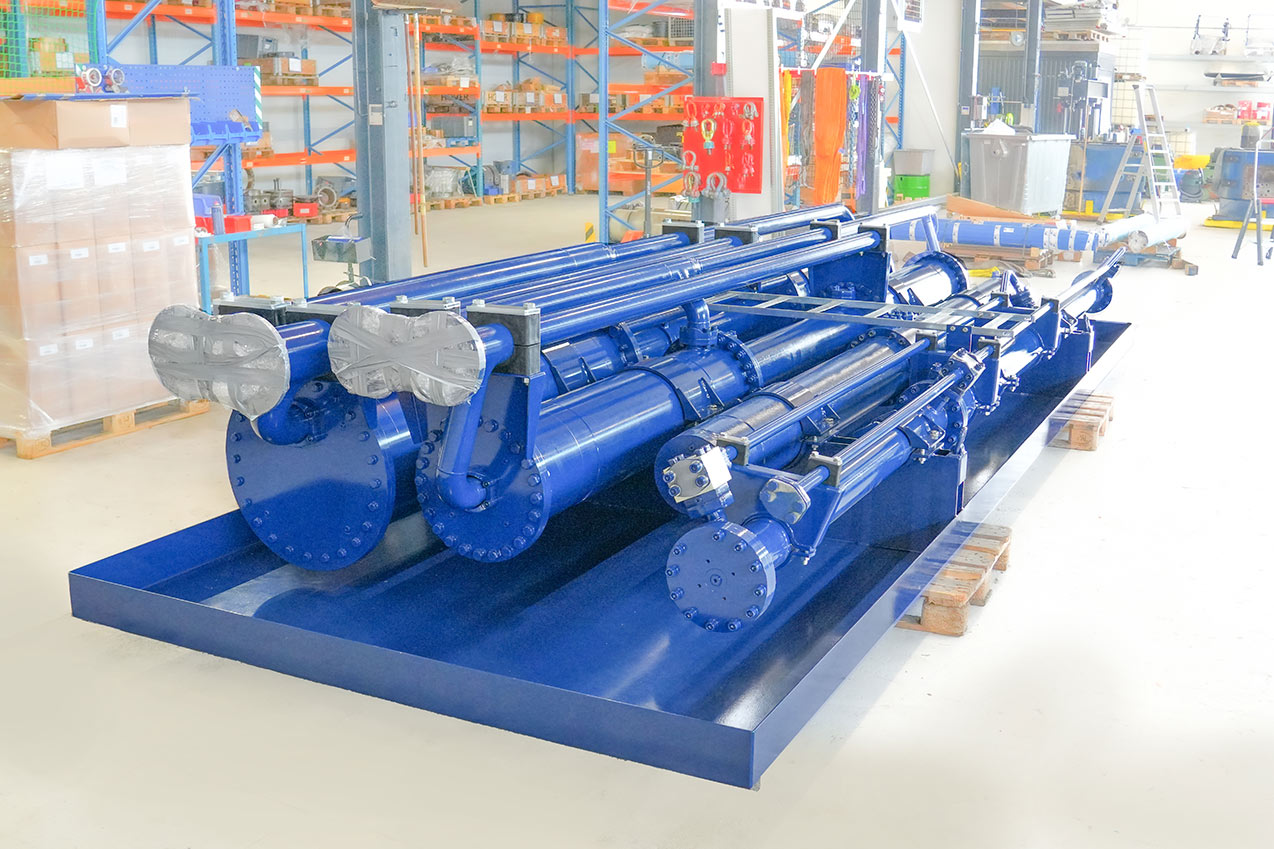
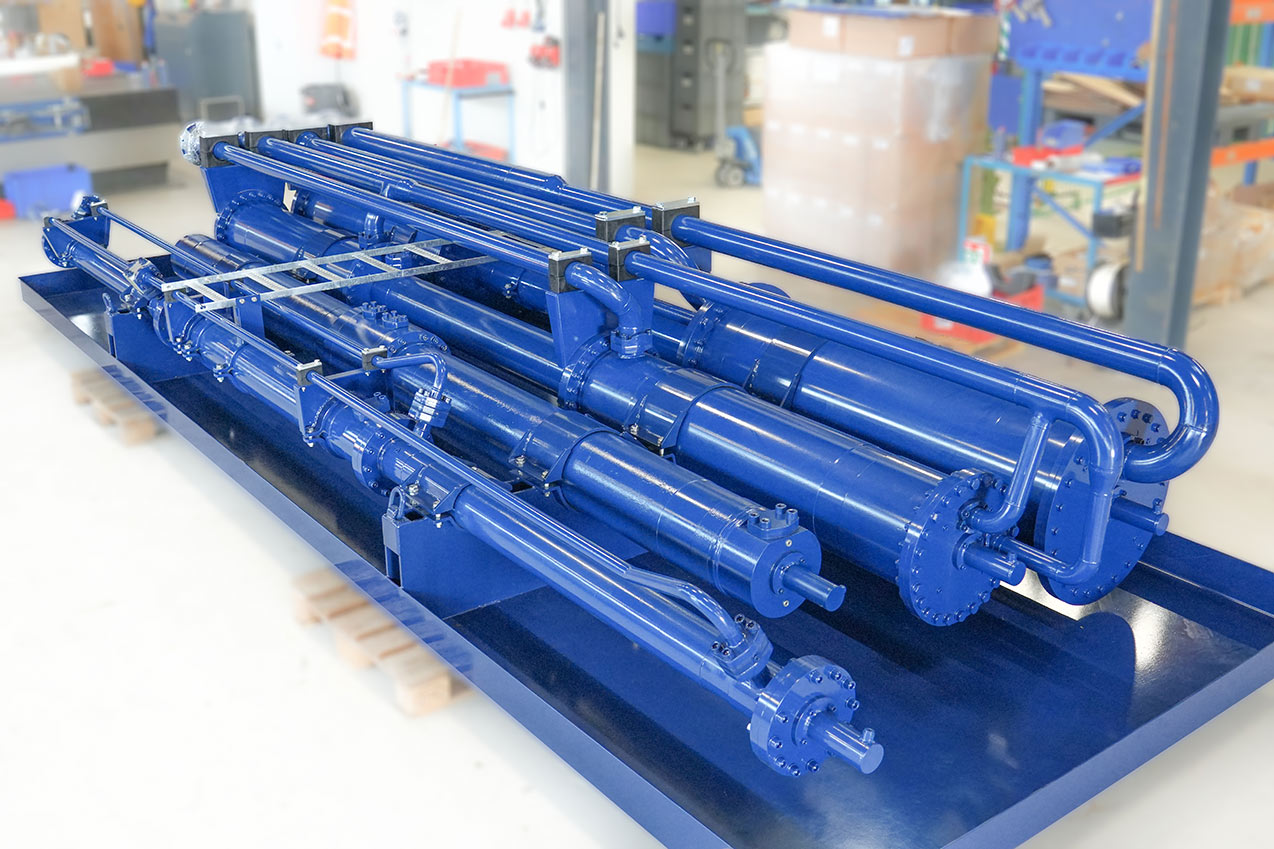
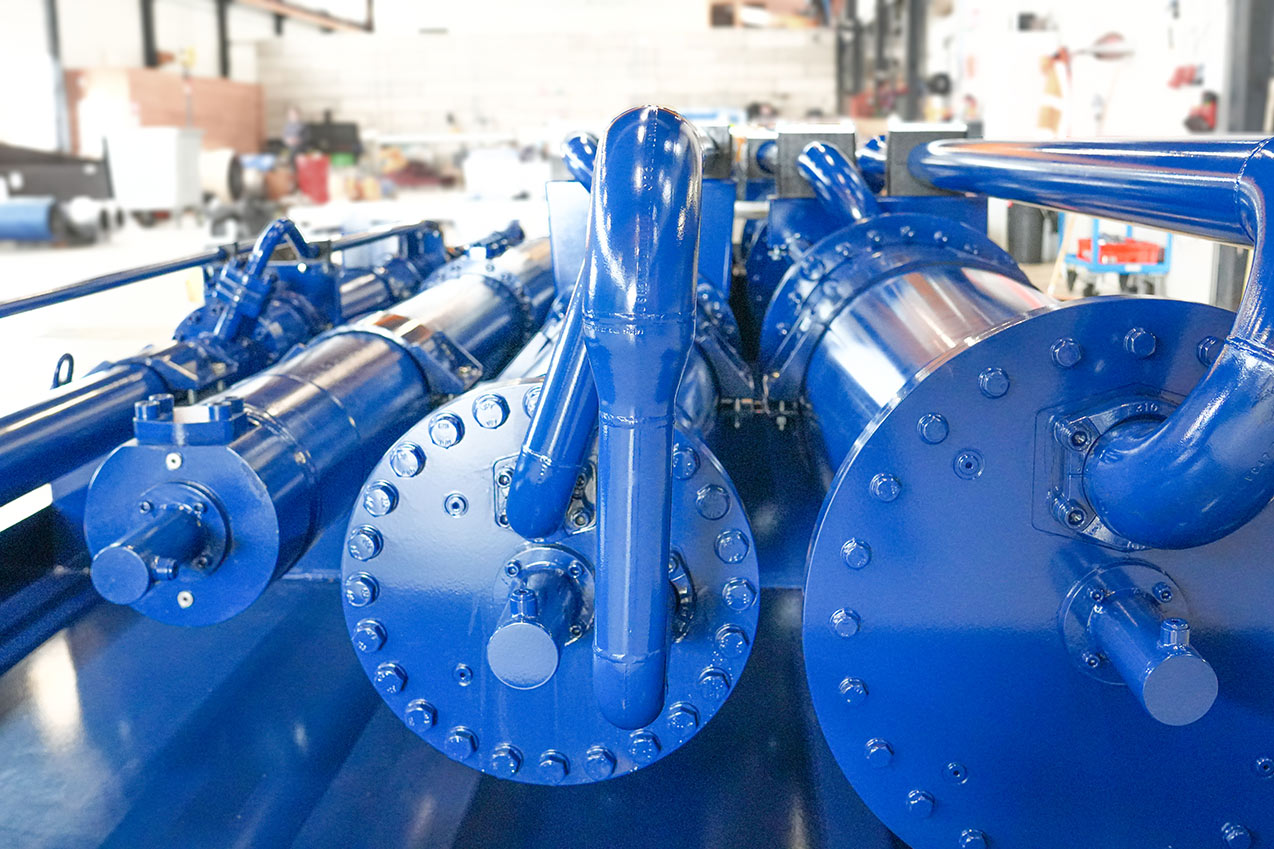
For this pilot, we supply a critical hydraulic subsystem consisting of the HPU, intensifier and pneumatic control system. This allows excess wind energy to be converted into pressure energy that can be stored efficiently and safely.
How it works
Charging mode: When there is a surplus of wind energy, our HPU delivers hydraulic flow to the intensifier. The cylinder converts electrical energy into pressure; the gas volume is compressed and stored in pressure vessels.
Discharge mode: When demand increases, the process reverses. The stored pressure drives the system, and the motor/pump unit operates as a generator.
A major advantage of this technology is that it uses the sea as natural cooling. The thermal capacity of the surrounding water reduces temperature peaks during compression and expansion,
allowing the process to operate nearly isothermally and with exceptional efficiency.
The design developed by our partner is modular, scalable, and free from cyclical degradation, making it a sustainable alternative to large‑scale battery systems. The result is a robust solution that supports grid balancing, prevents curtailment, and significantly improves the business case of offshore wind. With our hydraulic contribution to this pilot, we are working together with FLASC on a cleaner, more stable and future‑proof energy system in which renewable energy is utilized to its fullest potential.
This project is co-funded by the European Innovation Council (EIC) Accelerator, supporting breakthrough innovation under the EU’s Horizon Europe programme.