
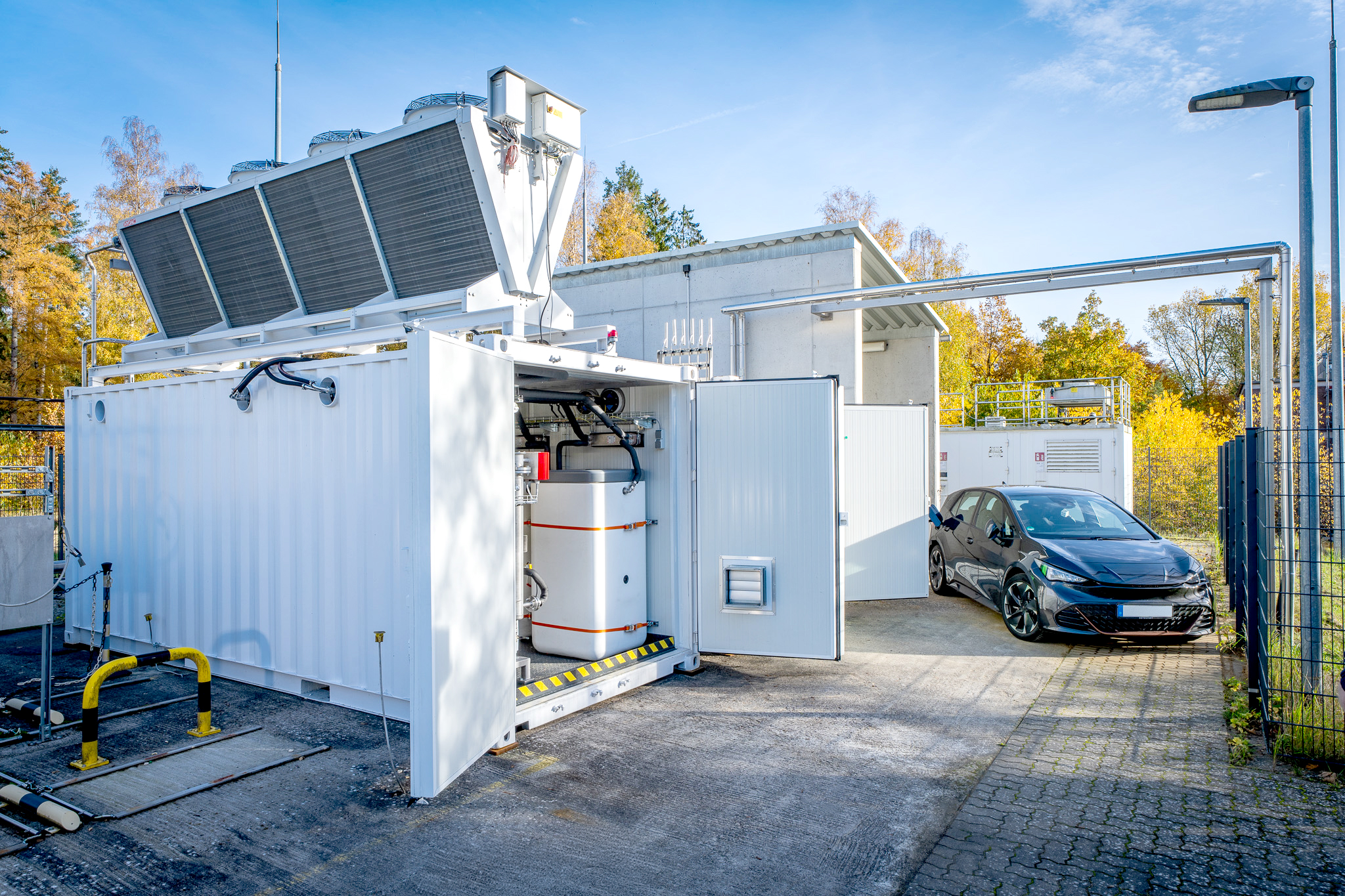
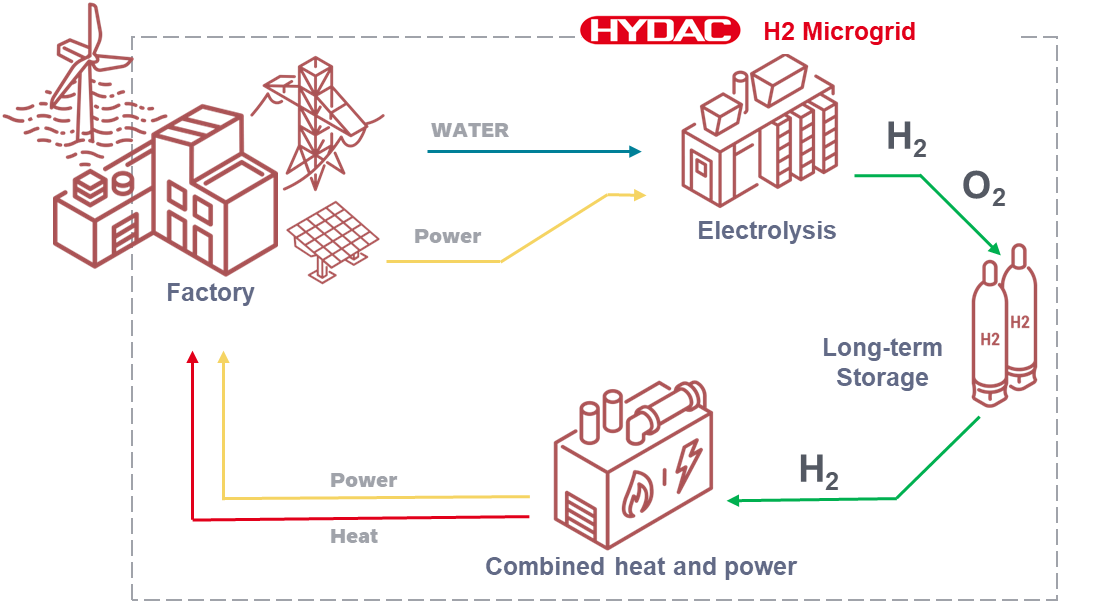
When solar (PV) and wind power generate more electricity than a site can currently consume or store in batteries, the H2 Microgrid comes into operation. It is designed as a holistic energy solution that integrates renewable power generation (such as PV and wind), battery buffering, hydrogen production, and high‑efficiency combined heat and power (CHP).
The hydrogen produced in this process serves as a highly efficient energy storage medium. Unlike batteries, hydrogen can be stored for long periods—weeks or even months—at large scale and with minimal losses. In addition, much of the value chain for hydrogen technologies is currently located in Europe, contributing to supply security. A microgrid is a smart, local energy system that enables sites to cover a large share of their energy demand independently, going far beyond simple battery storage.
Hydrogen can be used flexibly as a process gas or as an energy carrier, significantly reducing reliance on fossil fuels. It can also be used for vehicle refueling, supporting clean mobility solutions.
If hydrogen is not used directly in industrial processes, combined heat and power (CHP) systems using fuel cells or H2‑powered CHP units offer a viable solution. These systems generate electricity and usable heat simultaneously. Conventional power generation often results in a significant portion of the energy being lost as unused waste heat. In the microgrid, this heat (exhaust heat above the operating temperature of a heat pump) is actively captured and fed into the site’s heating system, for example, for building heating, process heat in production, or hot water supply. This integrated use of electricity and heat leads to a significant increase in the overall efficiency of the microgrid.