
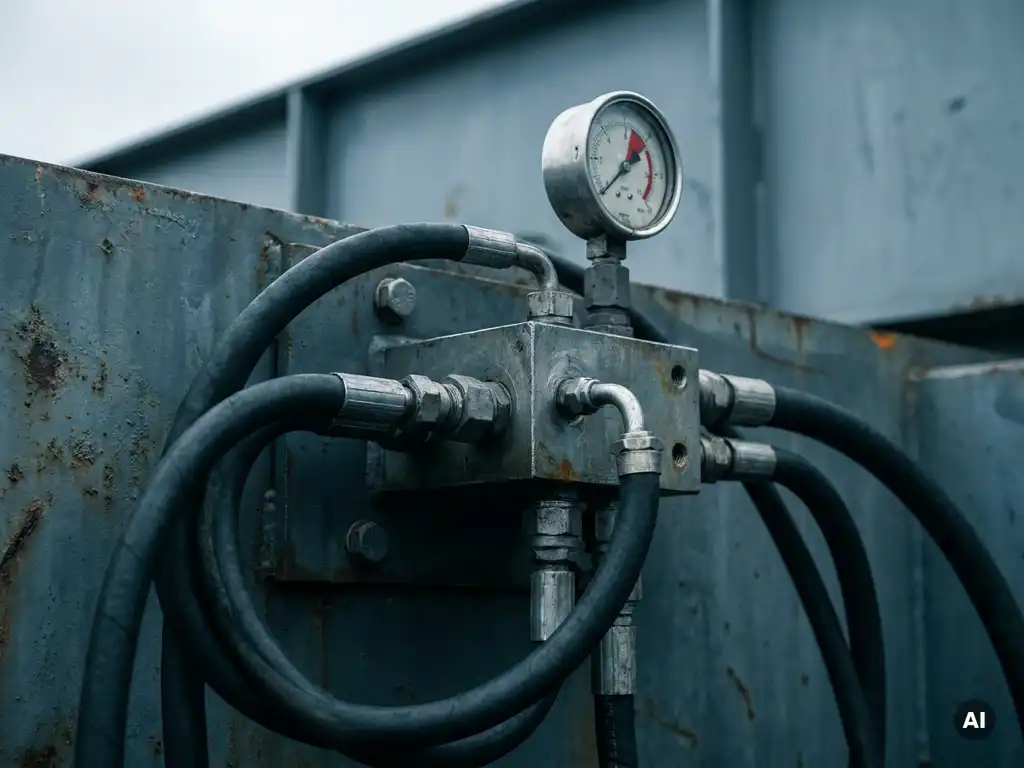
When hydraulic equipment underperforms offshore, the first place to check is fluid contamination, followed by pump condition, seal and hose integrity, and the electronic control system. Offshore environments combine saltwater exposure, vibration, temperature extremes, and remote operation, all of which accelerate degradation across every component in a marine hydraulic system. The sections below address the most common failure points systematically, so you can isolate the root cause before it becomes an unplanned shutdown.
What are the most common causes of hydraulic underperformance offshore?
The most common causes of hydraulic underperformance in offshore applications are fluid contamination, pump wear, seal failure, hose degradation, and faults in the electronic control system. These causes rarely appear in isolation. Offshore conditions amplify each failure mode, and a degraded component in one part of the system typically creates secondary symptoms elsewhere in the offshore hydraulic power unit.
In practice, maintenance engineers and asset managers working on jack-up platforms, offshore wind installation vessels, or dredging equipment tend to encounter a consistent pattern of issues. Contaminated fluid is statistically the most frequent root cause across offshore hydraulic systems, but pressure loss, sluggish actuator response, and system overheating each point to different underlying faults. A structured diagnostic approach, starting with fluid analysis and working through pressure and flow testing, saves time and prevents misdiagnosis.
How does fluid contamination affect offshore hydraulic systems?
Fluid contamination is the leading cause of premature component failure in offshore hydraulic systems. Particulate contamination accelerates wear in pumps, valves, and actuators, while water ingress, which is particularly common in marine environments, causes oxidation, reduces lubricity, and can lead to cavitation. Even small amounts of seawater in hydraulic fluid will degrade performance measurably.
Offshore conditions create multiple contamination entry points. Breather caps and reservoir seals exposed to salt spray, condensation inside tanks during temperature cycling, and hose fittings disturbed during maintenance all allow contaminants in. The ISO 4406 cleanliness code provides a practical benchmark: most offshore hydraulic power units require fluid at ISO 16/14/11 or cleaner, depending on the sensitivity of the control valves and servo systems involved.
Regular oil sampling and laboratory analysis give you a reliable picture of contamination levels, wear metal content, and water presence before symptoms become visible. Inline particle counters and condition monitoring sensors integrated into the hydraulic power pack can provide continuous data, allowing you to act on trends rather than reacting to failures.
What pressure and flow symptoms point to a failing hydraulic pump?
A failing hydraulic pump typically shows up as reduced system pressure that cannot reach the set relief valve threshold, sluggish actuator movement under load, increased cycle times, and elevated fluid temperature. Noise, particularly a high-pitched whine or cavitation knock, is another reliable indicator that the pump is no longer operating within its design parameters.
On a hydraulic winch or heave compensation system, pump degradation often presents as inconsistent line pull or an inability to hold load under dynamic conditions. On a jack-up platform’s hydraulic power unit, you may see the system struggling to maintain jacking speed under full load even though the relief valve is not opening.
To confirm pump wear, measure volumetric efficiency by comparing theoretical flow output against actual flow at a known pressure. A significant gap between the two, typically more than 10 to 15 percent, indicates internal bypass losses. Worn piston shoes, damaged port plates, or eroded vane tips are the usual culprits in variable displacement piston pumps commonly used in offshore hydraulic power packs. Pump overhaul or replacement is the appropriate response once efficiency has dropped to this level.
Why do hydraulic seals and hoses degrade faster in offshore environments?
Hydraulic seals and hoses degrade faster offshore because UV radiation, ozone, salt spray, temperature cycling, and mechanical vibration all attack elastomers simultaneously. A seal that would last several years in a controlled industrial environment may fail within months if the material specification is not matched to the offshore operating conditions.
Nitrile seals, which are adequate for many industrial applications, have limited resistance to ozone and UV exposure. Offshore hydraulic cylinders and actuators benefit from HNBR or EPDM seals where the environment demands it, and from seal housings that protect against direct seawater contact. Similarly, hydraulic hoses routed on exposed deck areas require UV-resistant outer sheaths and stainless steel or duplex fittings rather than carbon steel.
Vibration from vessel motion, deck machinery, and wave loading causes hose fatigue at end fittings, particularly where hoses are clamped without adequate allowance for flexing. Regular visual inspection of hose routing, clamp positions, and fitting condition forms a straightforward part of a preventive maintenance routine. Replacing hoses based on condition and age, rather than waiting for a failure, significantly reduces the risk of a hydraulic oil release offshore, which carries both operational and environmental consequences.
How can electronic control system faults mimic hydraulic problems?
Electronic control system faults can produce symptoms that are indistinguishable from hydraulic failures at first inspection. A faulty pressure transducer, a drifting position sensor, or a PLC output fault can cause an actuator to stop, a valve to fail to shift, or a system to depressurise, all without any mechanical fault in the hydraulic circuit itself.
This is particularly relevant for offshore hydraulic systems that incorporate proportional or servo valves with closed-loop electronic control, such as active heave compensation systems and automated tensioning winches. If the control signal to a proportional valve is incorrect, the valve position will be incorrect regardless of how well the hydraulic power pack is functioning. The symptom, an actuator that moves erratically or fails to reach its target position, looks hydraulic but is electronic in origin.
A structured diagnostic approach separates the two domains. Checking valve spool position feedback, verifying sensor calibration, and reviewing PLC fault logs before opening the hydraulic circuit prevents unnecessary disassembly and saves significant time. Offshore systems that integrate condition monitoring across both hydraulic and electronic layers make this separation much easier, because the data trail shows which domain the anomaly originated in.
You can find a detailed overview of the hydraulic drive and control systems we design for offshore applications at hydraulic systems for offshore wind, including how electronic control integrates with the hydraulic power unit.
When should offshore hydraulic issues be escalated to a specialist?
Offshore hydraulic issues should be escalated to a specialist when in-house diagnostics cannot identify the root cause, when the system involves servo or proportional control that requires calibrated test equipment, when pump or motor overhaul is needed, or when a failure affects safety-critical functions such as jacking, mooring, or load handling. Attempting to resolve complex faults without the right tools and expertise typically extends downtime rather than reducing it.
The decision to escalate is also appropriate when fluid analysis reveals contamination levels or wear metals that suggest systemic damage rather than isolated component wear. A single contamination event that has circulated through the system for an extended period may have damaged multiple components simultaneously, and a full system flush combined with component inspection is the correct response rather than replacing parts one at a time.
For offshore operations where mobilisation costs are high and weather windows are limited, having a specialist with the right hydraulic drive and control systems expertise available, either remotely for diagnostics or on-site for intervention, reduces the total cost of a hydraulic incident significantly. Establishing a service agreement before a failure occurs is more effective than sourcing emergency support under operational pressure.
How Hycom supports offshore hydraulic systems
We design, engineer, and service complete hydraulic power units and marine hydraulic systems for the offshore and offshore wind sectors, including active heave compensation systems, hydraulic winch drives, jacking systems, and specialised HPUs for monopile gripper and installation vessel applications. Our work covers the full lifecycle from initial engineering through commissioning and ongoing maintenance.
- Engineering and development of offshore hydraulic power units, including variable displacement pump configurations, integrated filtration, and closed-loop electronic control.
- Design and production of custom HPUs and hydraulic power packs for offshore wind installation, jack-up platforms, and dredging vessels.
- Maintenance, overhaul, and repair of hydraulic cylinders, pumps, motors, and complete offshore hydraulic systems.
- Condition monitoring and fluid analysis to identify contamination and wear trends before they result in unplanned downtime.
- Technical support, commissioning, and on-site service across our network of facilities in the Netherlands and through the HYDAC International Group.
Do you want to improve the reliability of your hydraulic systems, reduce unplanned downtime, or develop a new hydraulic installation for an offshore application? Explore our maintenance and overhaul services for hydraulic systems or discuss your hydraulic challenge with our specialists directly. We are ready to work through the technical details of your project and propose a solution that fits your operational requirements.