
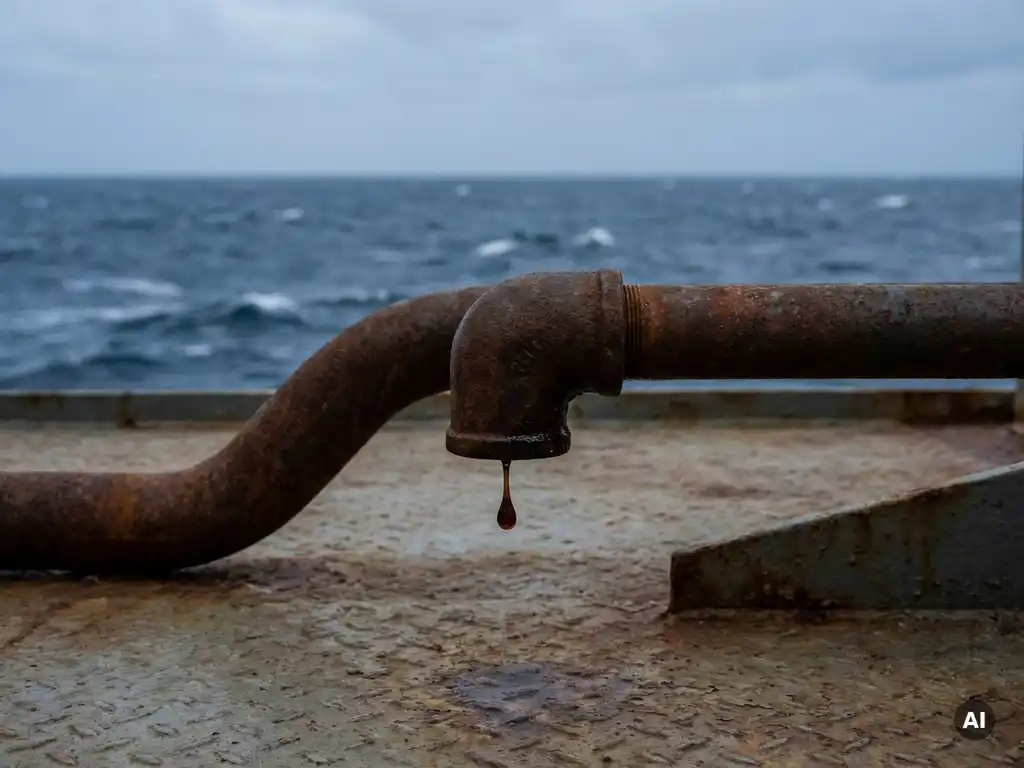
Hydraulic system failure on offshore vessels is most commonly caused by fluid contamination, followed by seal and hose degradation, overheating, and inadequate maintenance scheduling. These failure modes are interconnected: contaminated fluid accelerates seal wear, worn seals allow moisture ingress, and moisture-laden fluid raises operating temperatures. Understanding each cause helps you prevent unplanned downtime and protect expensive hydraulic power units and drive systems operating in some of the harshest conditions on earth.
What are the most common hydraulic failure points on offshore vessels?
The most common hydraulic failure points on offshore vessels are fluid contamination, seal and hose failure, overheating, and component wear in pumps, motors, and valves. These failure modes account for the vast majority of unplanned shutdowns in marine hydraulic systems, including hydraulic winches, jack-up systems, heave compensation units, and hydraulic power packs used across offshore operations.
On offshore vessels, hydraulic systems operate under conditions that accelerate wear far beyond what land-based installations experience. High cyclic loads, saltwater exposure, vibration, and temperature swings all place stress on every component in the system. The hydraulic systems used in offshore wind applications face additional challenges from the dynamic loads generated during monopile installation and jack-up operations.
The most frequently reported failure points include:
- Hydraulic fluid contamination: particulate matter, water ingress, and chemical degradation
- Seal and hose failure: accelerated by UV exposure, saltwater, and thermal cycling
- Pump and motor wear: driven by contaminated fluid and cavitation
- Valve malfunction: caused by particle contamination and corrosion
- Overheating: resulting from restricted cooling, high ambient temperatures, or excessive load cycles
- Structural fatigue in piping and manifolds: driven by vessel motion and vibration
Each of these failure points can cascade. A single contamination event that goes undetected can damage a pump, which generates metallic debris that then destroys downstream valves and actuators. This is why condition monitoring and regular fluid analysis are not optional extras in offshore hydraulic maintenance: they are the foundation of reliable operation.
How does fluid contamination lead to hydraulic system failure?
Fluid contamination causes hydraulic system failure by introducing particles, water, or chemical contaminants that degrade internal surfaces, block valve orifices, and break down lubricating oil films. In offshore hydraulic power units, contamination is the single largest contributor to premature component failure because even microscopic particles (measured in microns) can score precision-machined pump internals and cause valve spool sticking.
There are three main types of contamination in offshore hydraulic systems:
- Particulate contamination: metallic wear debris, dirt, and weld slag introduced during manufacture, maintenance, or system wear
- Water contamination: seawater ingress through damaged seals, condensation in reservoirs, or contaminated top-up fluid
- Chemical contamination: oxidation products, varnish deposits, and incompatible fluid mixing
Water contamination is particularly damaging in offshore environments. Even small quantities of water (as low as 0.1% by volume) reduce the lubricating capacity of hydraulic fluid, promote corrosion on metal surfaces, and cause hydrolysis of certain fluid additives. In cold offshore conditions, water can also form ice crystals that block filter elements and restrict flow to critical actuators such as hydraulic winch brakes.
Particulate contamination follows a self-reinforcing cycle: particles score pump internals, which generates more metallic debris, which in turn damages downstream valves and cylinders. Maintaining fluid cleanliness to the correct ISO 4406 cleanliness class (typically ISO 16/14/11 or better for servo-controlled systems) is the most direct way to extend component life in any offshore hydraulic power pack.
Effective contamination control requires a combination of high-performance filtration, regular fluid sampling, and strict cleanliness protocols during maintenance. Flushing circuits after any repair or component replacement is not optional: residual contamination from a single maintenance event can compromise an entire system.
Why do seals and hoses fail faster in offshore environments?
Seals and hoses fail faster in offshore environments because they are exposed to a combination of UV radiation, saltwater, ozone, wide temperature ranges, and mechanical vibration that is not present in protected industrial settings. These environmental stressors degrade elastomer materials, harden seal lips, embrittle hose covers, and accelerate fatigue cracking at fittings and end connections.
Standard hydraulic seals are designed for controlled industrial environments. Offshore, the same seal may be exposed to seawater spray, temperatures ranging from below zero in the North Sea to over 40°C in tropical regions, and continuous vibration from vessel motion and machinery. Nitrile rubber seals that perform well in a factory press can fail within months on an offshore platform if the compound is not suited to the specific chemical and thermal environment.
Hydraulic hoses on offshore vessels face additional stresses beyond those seen in fixed installations:
- Dynamic flexing: hoses connected to moving equipment such as hydraulic winches or crane systems flex continuously, fatiguing the wire reinforcement layers
- Ozone cracking: marine atmospheres contain elevated ozone levels that attack the outer cover of rubber hoses
- Fitting corrosion: carbon steel hose fittings corrode rapidly in saltwater environments, weakening the mechanical connection between hose and fitting
- UV degradation: prolonged exposure to sunlight hardens and cracks hose covers, allowing moisture to reach the reinforcement layers
Selecting the correct seal compound and hose specification for the offshore environment is therefore a design decision, not an afterthought. Fluorocarbon (FKM) seals, stainless steel or duplex fittings, and hoses with thermoplastic or PTFE-lined construction significantly extend service life in these conditions. Regular visual inspection and scheduled replacement intervals, rather than run-to-failure approaches, are the practical tools for managing seal and hose integrity on offshore vessels.
What role does overheating play in offshore hydraulic failures?
Overheating accelerates hydraulic fluid degradation, reduces viscosity below the minimum required for effective lubrication, and causes thermal expansion that affects seal integrity and valve clearances. In marine hydraulic systems, sustained operation above the design temperature range (typically above 60–70°C for mineral-based fluids) can permanently damage pumps, motors, and proportional valves within a relatively short operating period.
Offshore hydraulic systems are vulnerable to overheating for several specific reasons. Seawater-cooled heat exchangers can become fouled with marine growth, reducing cooling capacity significantly. High-duty-cycle operations such as continuous winch cycling or active heave compensation place sustained thermal loads on the system that exceed the design intent if the cooling system is not maintained. In warm climates, high ambient sea temperatures reduce the temperature differential available for heat rejection, compressing the thermal margin further.
The consequences of overheating progress through several stages:
- Viscosity reduction: fluid becomes too thin to maintain adequate oil film thickness in bearings and pump internals, increasing wear rates
- Fluid oxidation: elevated temperatures accelerate chemical breakdown of the base oil and additives, forming varnish and sludge deposits
- Seal hardening and extrusion: high temperatures cause elastomer seals to harden, lose flexibility, and eventually extrude into clearance gaps
- Thermal fatigue in hoses: repeated thermal cycling fatigues hose materials and accelerates cover cracking
Preventing overheating requires both correct system design (appropriately sized heat exchangers, adequate reservoir volume, and thermal relief valves) and active maintenance of the cooling circuit. Monitoring fluid temperature continuously and setting alarm thresholds well below the critical limit gives operators time to reduce load or investigate cooling system performance before damage occurs.
How does poor maintenance scheduling cause hydraulic breakdowns at sea?
Poor maintenance scheduling causes hydraulic breakdowns at sea by allowing minor wear, contamination, and degradation to progress undetected until components reach failure. On offshore vessels, the consequences of an unscheduled breakdown are far more severe than on land: emergency repairs at sea are expensive, logistically complex, and can halt critical operations such as hydraulic winch systems or jack-up procedures that cannot be safely interrupted.
Many offshore hydraulic failures are not sudden events. They develop over weeks or months through gradual processes: fluid contamination building up past the point where filtration can control it, seal lips wearing progressively until leakage rates exceed acceptable limits, or pump internal clearances opening up as wear debris accumulates. A well-structured maintenance schedule catches these trends before they become failures.
The most common maintenance scheduling failures in offshore hydraulic operations include:
- Missed fluid sampling intervals: allowing contamination and degradation to go undetected
- Overdue filter element replacement: causing filter bypass and unfiltered fluid circulation
- Deferred seal replacement: running seals beyond their service life because the system appears to be functioning
- Inadequate heat exchanger cleaning: allowing fouling to reduce cooling capacity progressively
- No condition monitoring on pumps and motors: missing early indicators of bearing wear or internal leakage
The hydraulic drive and control systems used in offshore applications are complex and interconnected. A maintenance schedule that treats each component in isolation misses the system-level interactions that cause cascading failures. Effective scheduling integrates fluid analysis results, vibration data, pressure drop measurements across filter elements, and thermal performance data into a single picture of system health.
When should hydraulic components on offshore vessels be replaced?
Hydraulic components on offshore vessels should be replaced based on a combination of condition-based indicators, manufacturer-recommended service intervals, and operational history, not on a fixed calendar alone. For high-duty components such as pumps, motors, and hydraulic cylinders in active heave compensation or offshore hydraulic power unit applications, waiting for failure is not a viable strategy given the operational and safety consequences of an unplanned breakdown at sea.
Replacement decisions should be driven by measurable indicators rather than assumptions:
- Pumps and motors: replace or overhaul when internal leakage causes volumetric efficiency to fall below approximately 85–90% of the original specification, or when vibration analysis indicates bearing wear
- Seals: replace at scheduled intervals defined by the seal compound’s rated service life in the specific operating environment, or immediately when leakage exceeds acceptable limits
- Hoses: replace based on visual inspection results (cover cracking, kinking, fitting corrosion) and manufacturer service life recommendations, typically every three to five years in offshore service regardless of apparent condition
- Filter elements: replace when differential pressure indicators signal bypass conditions, or at scheduled intervals if differential pressure monitoring is not installed
- Hydraulic fluid: replace when fluid analysis shows contamination levels, viscosity, or acid number outside acceptable limits, regardless of operating hours
- Accumulators: inspect and recharge nitrogen pre-charge pressure at regular intervals; replace bladders or diaphragms when pre-charge cannot be maintained
For offshore wind applications (including systems used with monopile gripper equipment and jack-up platform hydraulics), component replacement planning should be integrated into planned maintenance windows coordinated with vessel scheduling. Replacing components proactively during a scheduled drydock is substantially less costly than an emergency replacement during active offshore operations.
Condition monitoring tools, including online fluid particle counters, temperature sensors, pressure transducers, and vibration analysis on rotating machinery, provide the data needed to move from time-based to condition-based replacement strategies. This approach reduces both unnecessary component replacement and the risk of in-service failure.
How Hycom supports offshore hydraulic reliability
We design, engineer, and service complete hydraulic systems for offshore vessels, offshore wind installations, and dredging applications. Our experience with offshore hydraulic power units, active heave compensation systems, hydraulic winches, and jack-up hydraulics means we understand the specific failure modes described in this article and how to prevent them through design choices, component selection, and structured maintenance.
Our support for offshore hydraulic reliability includes:
- Engineering and development of hydraulic power units and drive and control systems optimized for the offshore environment, including correct seal specification, cooling system sizing, and filtration design
- Design and production of custom hydraulic power packs and complete system packages for offshore wind, jack-up platforms, dredging vessels, and marine applications
- Maintenance, overhaul, and repair of hydraulic components including pumps, motors, cylinders, and valve assemblies, with facilities across multiple locations in the Netherlands
- Hydraulic flushing and fluid cleanliness services to restore contaminated systems to specification after repairs or commissioning
- Condition monitoring support and technical advice on maintenance scheduling to reduce unplanned downtime on hydraulic installations
- Technical support, installation, and commissioning for new hydraulic systems and system upgrades on offshore vessels
Wil je de betrouwbaarheid van je hydraulische systemen verbeteren, ongeplande stilstand beperken of een nieuwe hydraulische installatie ontwikkelen? Ontdek welke technische oplossingen en diensten aansluiten op jouw toepassing via onderhoud en revisie van hydraulische systemen. We denken graag met je mee over een passende aanpak voor jouw project. Bespreek jouw hydraulische uitdaging met onze specialisten voor technisch advies of een projectbespreking.