
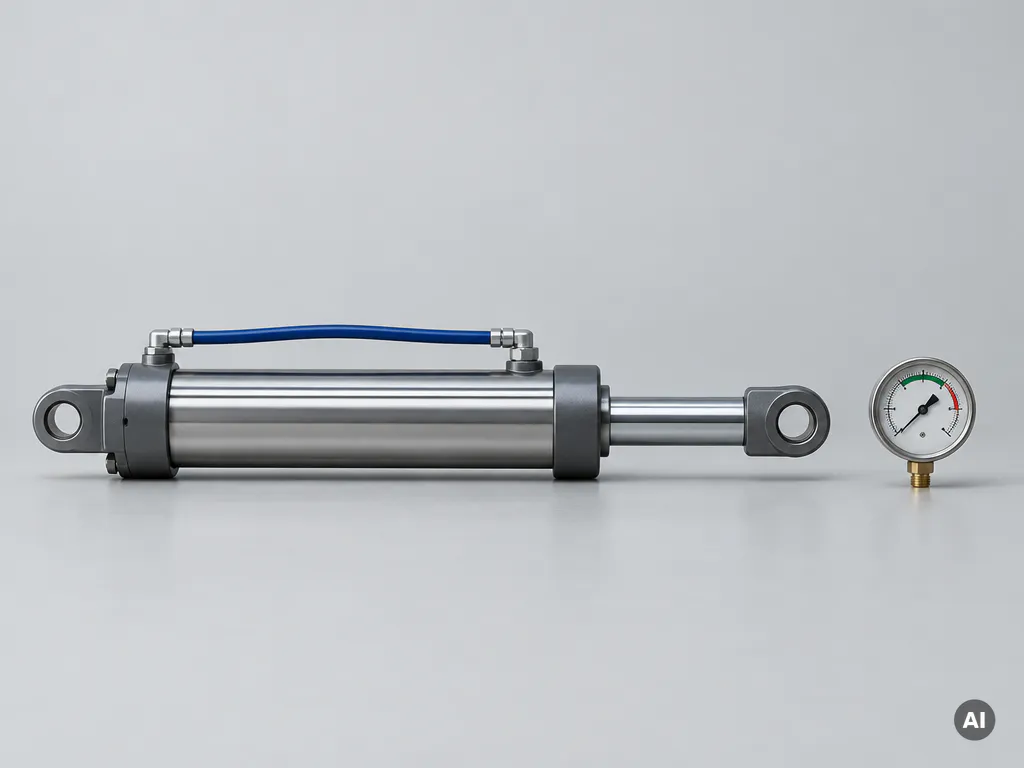
Hydraulic machines need a visual check daily or weekly, a measured inspection (pressures, temperatures, oil condition) every one to three months, and a full service or oil analysis once or twice a year. The exact interval depends on duty cycle, environment and system criticality. Machines in offshore, dredging and civil works usually need shorter intervals than machines running a single shift in a clean workshop. Below, we explain what drives the interval, what to check, which warning signs cannot wait and who should document it.
What Makes Some Machines Need Checking More Often?
Machines need more frequent checks when they run continuously, operate under high pressure, work in harsh environments or carry high consequences of failure. Duty cycle, contamination exposure, temperature swings and the cost of unplanned downtime are the four main factors that shorten an inspection interval.
A hydraulic power unit (HPU) on a jack-up platform or a dredging vessel works around the clock, in salt air, moisture and vibration. A press in a controlled factory hall works in far milder conditions. The first needs weekly walk-around checks and short measurement cycles. The second can often run on a monthly or quarterly rhythm. These factors typically push intervals shorter:
- Continuous or high-load operation: winches, active heave compensation systems and lifting installations wear faster than intermittent equipment.
- Dirty or wet environments: dredging, civil works and offshore sites expose seals, breathers and hoses to dust, water and salt.
- Temperature extremes: heat accelerates oil ageing, while cold raises viscosity and stresses pumps at start-up.
- Safety-critical or hard-to-reach equipment: when failure stops a vessel, a bridge or a production line, you inspect earlier and more often.
Machine age also matters. New installations deserve extra attention during the first operating hours, when flushing residue and settling seals can show up. Older systems need tighter monitoring because of cumulative wear on cylinders, pumps and hydraulic piping.
What Should Be Checked During a Routine Inspection?
A routine inspection of hydraulic equipment covers oil level and condition, leaks, hoses and fittings, filter status, operating pressure and temperature, and unusual noise or vibration. These checks take minutes at the visual level and give an early read on the health of the whole system.
Work through the system in a fixed order so nothing gets skipped:
- Oil level and appearance: check the reservoir level and look for foaming, cloudiness or a burnt smell.
- Leaks: inspect cylinder rod seals, pump shafts, manifold connections and hose ends. Even small seepage points to a developing problem with hydraulic leakage.
- Hoses and hydraulic piping: look for abrasion, cracking, blistering, loose clamps and corroded fittings.
- Filters: read the clogging indicator and record the differential pressure where fitted.
- Pressure and temperature: compare readings with the commissioning values. A drift in either is an early sign of internal wear.
- Cylinders: check rods for scoring, pitting and corrosion, and watch for jerky or slow movement.
- Breathers and cooling: confirm breather elements are clean and that coolers are free of fouling.
Add a thorough inspection at longer intervals, including accumulator pre-charge, valve response and electrical control signals. For systems with advanced controls, verify sensor readings and control behaviour alongside the mechanical checks.
Which Warning Signs Mean a Check Can’t Wait?
You should inspect a hydraulic system immediately when you see visible leaks, rising oil temperature, loss of pressure or force, slow or erratic movement, unusual noise, or milky or dark oil. These symptoms signal that wear, contamination or component failure is already developing and can escalate quickly.
Treat the following as stop-and-investigate triggers instead of waiting for the next planned round:
- Whining, knocking or cavitation noise: often points to air in the oil, a blocked suction line or a worn pump.
- Overheating: a system running hotter than normal may have internal leakage, a failing cooler or an overloaded circuit.
- Slow cylinder speed or lost holding force: usually indicates worn seals, internal bypass or declining pump efficiency.
- Foamy or milky oil: suggests air or water ingress, both of which damage components quickly.
- Frequent filter changes: a clogging filter signals a contamination source upstream that needs finding, not just a faster change cycle.
- Visible oil on rods, hoses or the floor: a growing leak affects safety, the environment and oil level.
Any of these on offshore, lifting or safety-related equipment calls for same-day assessment. Early action often turns a seal replacement or a hydraulic cylinder repair into a minor job instead of a full overhaul.
How Does Oil Condition Affect Inspection Timing?
Oil condition sets the inspection rhythm because contamination, water and degraded additives cause most hydraulic wear. Clean, dry oil lets you extend intervals safely, while particle build-up, water or oxidation shortens them. Regular oil sampling and hydraulic oil filtration show you when to act, instead of relying on a fixed calendar alone.
Oil analysis normally reports particle count (often against an ISO 4406 cleanliness code), water content, viscosity and acidity. Trends matter more than single values. A rising particle count points to wear or ingress, and increasing water content points to failing seals, breathers or condensation. Many operators sample every three to six months, and more often on critical or heavily loaded systems. Use your component manufacturers’ cleanliness targets as the benchmark.
Good fluid filtration supports longer intervals. Use the right filter ratings, check indicators and keep breathers in good condition. After a component failure or repair, a thorough flushing of the system removes debris before it circulates into new parts. Condition monitoring with online particle counters or temperature and pressure sensors adds continuous data between manual checks, which suits remote or hard-to-access installations.
Can Regular Checks Really Prevent Costly Breakdowns?
Yes. Regular checks catch leaks, contamination and wear before they damage expensive components, so you replace a seal or a filter instead of a pump, cylinder or complete system. Planned maintenance also lets you schedule repairs around operations instead of reacting to unplanned stoppages.
The logic is simple. Most hydraulic failures develop gradually. A contaminated oil film accelerates wear in a pump, wear releases more particles, and those particles score cylinder rods and valve spools. Each stage costs more than the last. An inspection that finds the first symptom stops the chain. Checks also protect safety and the environment, since a failing hose or a leaking cylinder is a risk to people and a source of oil spills.
From a total cost of ownership perspective, planned inspection and servicing keep components in working range, extend service life and reduce emergency call-outs. For offshore and dredging operations, where a failure can idle a vessel or platform, avoiding one unplanned stop often outweighs the cost of the full inspection programme. When a component does reach end of life, a timely hydraulic pump overhaul or hydraulic cylinder overhaul restores performance at a fraction of the price of replacement.
Who Should Perform and Document the Checks?
Operators and maintenance technicians should perform routine visual checks, while qualified hydraulic specialists should carry out measurements, oil analysis interpretation and overhauls. Every check needs a record: date, readings, findings and actions. Documentation builds the trend data that shows when a system starts to drift.
A practical split looks like this:
- Operators: daily or per-shift walk-around, noting leaks, noise, temperature and oil level.
- Maintenance technicians: scheduled measurements, filter changes, sampling and basic adjustments.
- Hydraulic specialists: analysis of oil reports, diagnostics of pressure and flow problems, and repair or overhaul of pumps, motors and cylinders.
Keep a logbook or maintenance system entry per installation, with baseline values from commissioning. Compare each reading against that baseline and against previous inspections. For equipment under class, inspection or regulatory requirements, such as lifting appliances and offshore installations, follow the specific schedule and certification rules that apply to your equipment and flag. For complex systems, such as hydraulic systems for offshore wind or heave compensation, specialist support helps you set realistic intervals based on actual operating data.
A structured plan also helps when you manage a fleet of installations. Combining inspection data with the design logic of your hydraulic drive and control systems lets you prioritise the assets that most need attention.
Hoe HYCOM helpt bij het onderhoud van hydraulische installaties
We ondersteunen je bij het opzetten en uitvoeren van een inspectie- en onderhoudsaanpak die past bij jouw installatie, belasting en werkomgeving. Vanuit onze vestigingen in Apeldoorn, Drachten en Enschede combineren we engineering, productie en service, zodat je met één partner van inspectie tot revisie kunt werken.
- Engineering en ontwikkeling van hydraulische aandrijf- en besturingssystemen.
- Ontwerp en productie van hydraulische power units en maatwerkoplossingen.
- Onderhoud, revisie en reparatie van hydraulische cilinders, pompen, motoren en leidingwerk.
- Optimalisatie van betrouwbaarheid, operationele prestaties en levensduur.
- Technische ondersteuning, installatie, inbedrijfstelling en service.
Wil je de betrouwbaarheid van je hydraulische systemen verbeteren, ongeplande stilstand beperken of een nieuwe hydraulische installatie ontwikkelen? Ontdek welke technische oplossingen en diensten aansluiten op jouw toepassing, zoals ons aanbod voor onderhoud en revisie van hydraulische systemen. We denken graag met je mee over een passende aanpak voor jouw project. Neem contact op en bespreek jouw hydraulische uitdaging met onze specialisten voor technisch advies of een projectbespreking.