
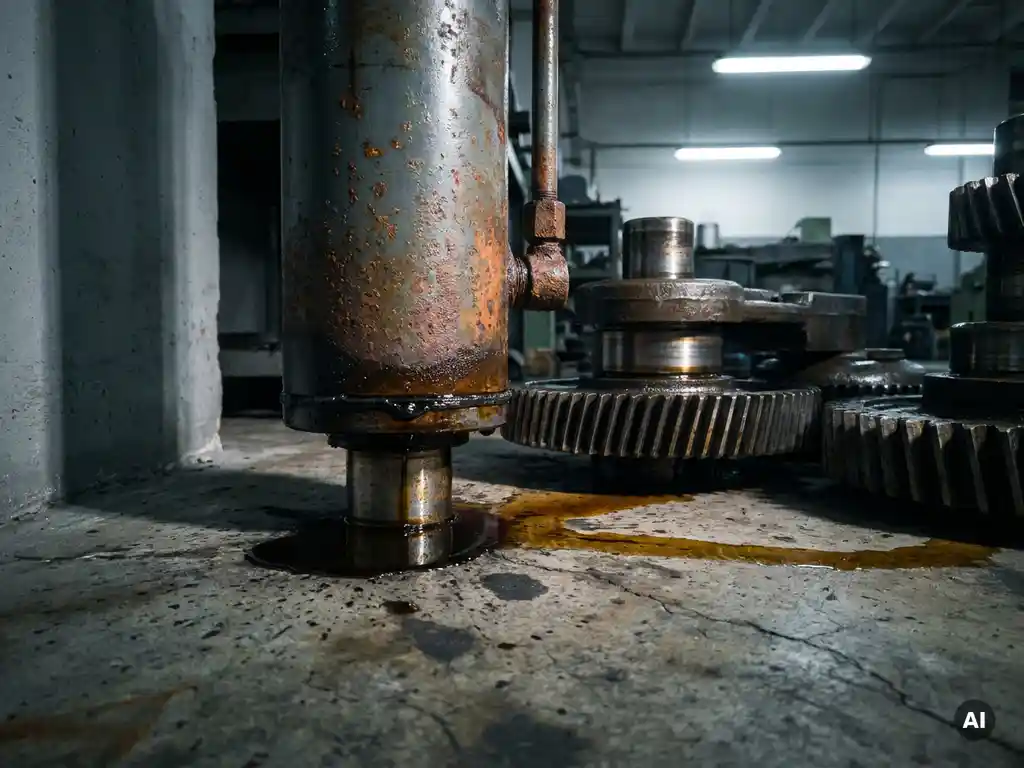
Yes, poor maintenance can cause a hydraulic system to fail completely. Neglected fluid changes, clogged filters, worn seals, and ignored leaks create a chain of degradation that ultimately leads to total system breakdown. This applies to any hydraulic installation, from industrial presses to offshore hydraulic power units and dredging systems. The sections below answer the most common questions about how maintenance failures translate into system failure.
What are the most common ways hydraulic systems fail?
Hydraulic systems most commonly fail due to fluid contamination, internal leakage, component wear, and overheating. These failure modes are interconnected: contaminated hydraulic oil accelerates wear on pumps, valves, and cylinders, which increases internal leakage, which in turn reduces system pressure and efficiency until the system can no longer perform its function.
Contamination is the leading cause of hydraulic failure across all industries. Particles as small as 10 to 15 microns can damage precision-machined surfaces inside hydraulic pumps and control valves. Water ingress is equally damaging, as it degrades hydraulic oil, promotes corrosion, and reduces lubricating film strength. In offshore and dredging applications, where systems operate under high loads and in demanding environments, the risk of contamination is particularly high.
Other frequent failure causes include:
- Seal degradation leading to external and internal leakage
- Cavitation in hydraulic pumps caused by insufficient oil supply or excessive oil viscosity
- Overheating due to blocked coolers, low fluid levels, or excessive internal leakage
- Fatigue failure in hydraulic cylinders, hoses, and piping from cyclic loading
- Incorrect fluid specification causing incompatibility with seals and components
Each of these failure modes is preventable through structured maintenance. When multiple issues are allowed to develop simultaneously, the result is often a complete and unplanned shutdown of the hydraulische aandrijf- en besturingssystemen.
How does neglected maintenance lead to complete system failure?
Neglected maintenance leads to complete hydraulic system failure through a progressive degradation process. Small issues that go unaddressed, such as a minor leak, a partially blocked filter, or slightly degraded oil, compound over time. Each problem accelerates the next, until a critical component fails and the entire system goes offline.
A blocked return filter, for example, increases back pressure in the system. If the bypass valve opens to protect the circuit, unfiltered oil circulates through the system, carrying particles that wear down pump internals and valve spools. Reduced pump efficiency raises oil temperature. Higher temperatures degrade seal materials and thin the oil, increasing internal leakage further. At this point, the system may lose the ability to hold pressure entirely.
In applications like active heave compensation systems or hydraulic winch drives on offshore vessels, a complete hydraulic failure during operations creates serious safety and operational risks. For bridge and lock drive systems in civil works, an unplanned failure can halt critical infrastructure. The financial and operational consequences of a full system failure far exceed the cost of the maintenance that would have prevented it.
Preventive maintenance interrupts this chain of degradation before it reaches a critical threshold. Condition monitoring, regular oil sampling, and scheduled inspections allow you to identify and correct developing faults before they cascade into system-wide failure.
What happens when hydraulic fluid is not changed regularly?
When hydraulic fluid is not changed regularly, it degrades chemically and accumulates contaminants that damage every component in the system. Over time, oxidation products, water, metallic particles, and additive depletion turn the fluid from a clean lubricant into an abrasive, corrosive medium that actively harms pumps, valves, seals, and cylinders.
Fresh hydraulic oil contains anti-wear additives, oxidation inhibitors, and corrosion inhibitors. These additives are consumed over time, especially in systems that run at high temperatures or under heavy cyclic loads. Once the additive package is depleted, the base oil loses its protective properties. Metal surfaces begin to wear more rapidly, generating particles that circulate through the system even when filters are in place.
Water contamination compounds this problem. Hydraulic oil absorbs moisture from the atmosphere, particularly in systems that experience temperature cycling. Even small amounts of water, well below one percent by volume, can reduce the lubricating film strength significantly and promote corrosion in cylinders, valve bodies, and pump housings.
Proper hydraulische olie filteren extends fluid life, but it cannot replace the need for periodic fluid changes. Oil analysis, performed at regular intervals, gives you a direct view of fluid condition and allows you to time changes based on actual degradation rather than fixed intervals alone.
Which hydraulic components are most vulnerable to maintenance failure?
The components most vulnerable to maintenance failure are hydraulic pumps, control valves, seals and cylinder rod seals, and filtration elements. These components either handle contaminated fluid directly, operate with tight clearances that contamination destroys, or rely on regular replacement to maintain system integrity.
Hydraulic pumps and motors
Hydraulic pumps are among the first components to show the effects of contaminated or degraded oil. Piston pumps and gear pumps operate with very small internal clearances, and abrasive particles in the oil cause accelerated wear on port plates, pistons, and gear flanks. This internal wear increases bypass flow, reducing volumetric efficiency and system pressure. Hydraulische pomprevisie is often needed sooner than expected when fluid maintenance is neglected, and in severe cases, a pump that has run on degraded oil for too long may not be recoverable through overhaul.
Seals and hydraulic cylinders
Seals degrade when exposed to oil that has exceeded its service life, contains water, or is incompatible with the seal material. Rod seals on hydraulic cylinders are particularly vulnerable because they are also exposed to external contamination from the operating environment. Damaged seals cause hydraulieklekkage, which reduces actuator force, creates environmental hazards, and accelerates the contamination of the remaining oil. In hydraulic cylinders used in dredging or civil works applications, seal failure under load can result in loss of position control. Hydraulische cilinderreparatie or hydraulische cilinderrevisie becomes necessary when seal failure is not caught early.
Filters and filtration systems
Filters protect the rest of the system, but they require regular replacement to remain effective. A saturated filter element that has not been changed on schedule either bypasses unfiltered oil into the circuit or creates excessive pressure drop that starves downstream components. Neither outcome is acceptable in high-reliability applications. Monitoring differential pressure across filter housings is a straightforward way to track filter condition between scheduled service intervals.
How can you tell if a hydraulic system is about to fail?
A hydraulic system approaching failure typically shows several warning signs: reduced operating speed or force, abnormal noise from the pump or actuators, elevated oil temperature, visible external leaks, and increased cycle times. These symptoms indicate that one or more components are no longer performing within specification and that the system is operating under stress.
Specific indicators to monitor include:
- Unusual pump noise such as whining, knocking, or cavitation sounds, which indicate wear or insufficient oil supply
- Slow or erratic actuator movement pointing to internal leakage in cylinders or valves
- Rising system temperature beyond normal operating range, often caused by excessive internal leakage or a failing cooler
- Pressure fluctuations or inability to reach set pressure, indicating pump wear or relief valve problems
- Visible hydraulieklekkage at hose fittings, cylinder rod seals, or valve connections
- Discolored or foamy oil indicating water contamination or air ingestion
Condition monitoring tools such as oil particle counters, temperature sensors, and pressure transducers allow you to detect these trends before they become failures. In complex systems such as those used in hydraulische systemen voor offshore wind, continuous condition monitoring is particularly valuable because unplanned downtime carries high operational and safety costs. Regular oil samples sent to a laboratory provide detailed analysis of wear metals, water content, and additive levels, giving you an early warning of developing problems.
How often should hydraulic systems be serviced to prevent failure?
Hydraulic systems should be serviced according to a schedule that combines fixed time intervals with condition-based triggers. As a general guideline, filter elements should be inspected every 500 to 1,000 operating hours, oil samples should be taken every 500 hours or every three months, and a full system inspection should be carried out annually. However, the right interval depends on the application, operating environment, and system design.
Systems operating in harsh environments, such as offshore platforms, dredging vessels, or construction sites with high dust or water exposure, require more frequent attention than systems in controlled industrial settings. High-duty-cycle systems that run continuously under heavy load also degrade faster than intermittently used equipment.
A practical maintenance schedule for most hydraulic systems includes:
- Daily or per-shift checks: Oil level, temperature, visible leaks, and abnormal noise
- Monthly checks: Filter differential pressure, hose and fitting condition, actuator performance
- Every 500 to 1,000 hours: Oil sampling and analysis, filter element replacement, seal inspection
- Annually or per major overhaul cycle: Full system inspection, fluid change if indicated by oil analysis, pump and valve performance testing, cylinder seal replacement if needed
Following a structured hydrauliekservice schedule reduces the risk of unplanned failures, extends component life, and lowers total cost of ownership. For complex systems with multiple actuators, control valves, and hydraulic power units, a documented maintenance plan also provides a clear audit trail and supports compliance with operational safety requirements. Hydrauliekonderhoud is not a reactive activity: it is a planned engineering discipline that keeps systems performing reliably across their full service life.
Hoe HYCOM helpt bij het onderhoud van hydraulische installaties
Wij ondersteunen maintenance managers, engineers en asset managers bij het voorkomen van hydraulische systeemuitval door technisch onderbouwde service en revisiediensten aan te bieden. Onze aanpak is gericht op het verbeteren van betrouwbaarheid, het verlengen van de levensduur van componenten en het beperken van ongeplande stilstand.
- Revisie en reparatie van hydraulische cilinders, inclusief vervanging van afdichtingen, oppervlaktebehandeling en functionele tests na overhaul
- Pomp- en motoroverhaul voor alle gangbare typen hydraulische pompen en motoren, inclusief conditiebeoordeling en prestatietests
- Hydraulisch leidingwerk en filtratieoplossingen, inclusief spoelunits voor het reinigen van nieuwe of gerepareerde hydraulische circuits
- Onderhoud en inspectie van complete hydraulische systemen, van HPU’s en aandrijfsystemen tot besturingssystemen en actuatoren
- Technische ondersteuning en serviceverlening vanuit zeven vestigingen in Nederland, met meer dan 300 gespecialiseerde medewerkers en meer dan 50 jaar ervaring
Wil je de betrouwbaarheid van je hydraulische systemen verbeteren, ongeplande stilstand beperken of een nieuwe hydraulische installatie ontwikkelen? Ontdek welke technische oplossingen en diensten aansluiten op jouw toepassing via onderhoud en revisie van hydraulische systemen. We denken graag met je mee over een passende aanpak voor jouw project. Bespreek jouw hydraulische uitdaging met onze specialisten voor technisch advies of een projectbespreking.