
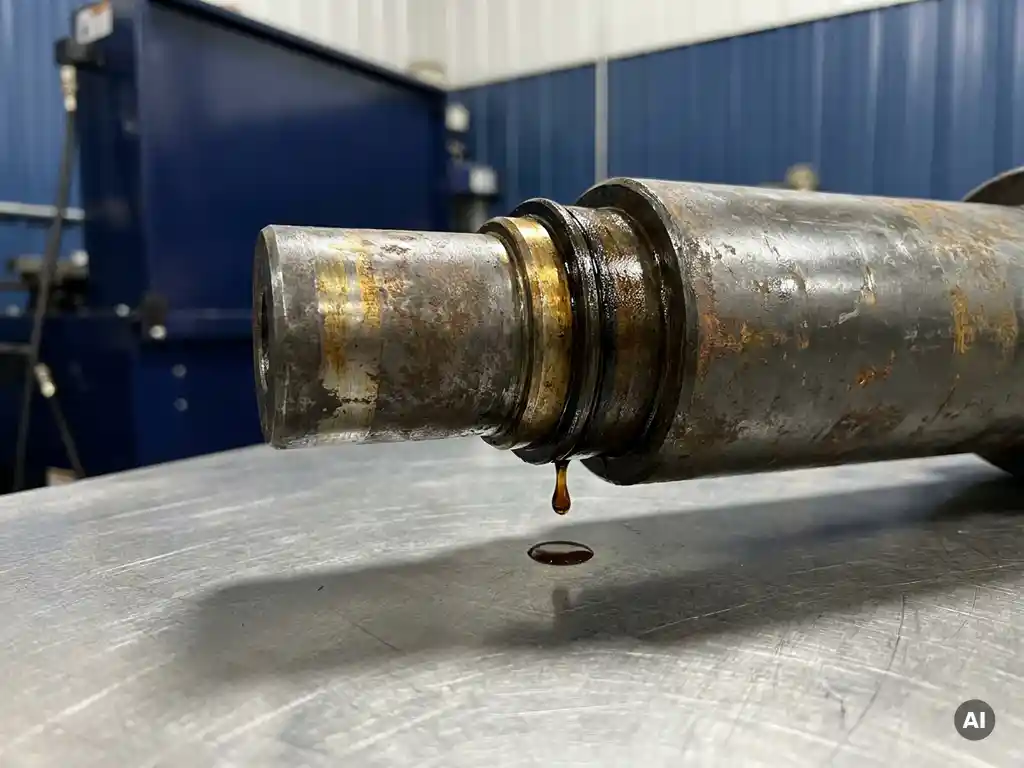
Hydraulic maintenance is overdue when you notice warning signs such as fluid leakage, abnormal noise, sluggish actuator response, rising operating temperatures, or contaminated fluid. These indicators point to degradation that is already affecting system performance. For maintenance managers and engineers working with hydraulic drive and control systems in demanding sectors such as offshore, dredging, or civil works, recognising these signals early is what separates planned intervention from unplanned downtime. The sections below address the most common questions around hydraulic maintenance timing, fluid condition, component wear, and when to call in a specialist.
What are the warning signs of neglected hydraulic maintenance?
The most recognisable warning signs of neglected hydraulic maintenance are external leakage, increased cycle times, unusual noise from pumps or motors, excessive heat, and visible contamination in the hydraulic fluid. Any one of these symptoms indicates that maintenance is overdue or that a component has already begun to fail.
In practice, these signs rarely appear in isolation. A hydraulic power unit (HPU) that runs hotter than its design temperature is often doing so because the fluid viscosity has degraded or the filter is partially blocked, restricting flow. Sluggish cylinder response in a bridge drive or dredging installation typically points to internal leakage across worn seals or a drop in pump delivery pressure. Noise, particularly a knocking or whining sound from a hydraulic pump, often signals cavitation or aeration in the fluid, both of which accelerate internal wear.
Hydraulieklekkage is one of the most visible indicators and should never be treated as routine. A small external leak on a hydraulic cylinder or fitting may seem minor, but it signals seal degradation that will worsen under continued operating pressure. Internal leakage is harder to detect without measurement but equally damaging to system efficiency and component life.
How often should hydraulic systems be serviced?
The service interval for hydraulic systems depends on the application, operating environment, and the manufacturer’s specifications for individual components, but a general baseline for industrial and offshore systems is a full inspection every 1,000 to 2,000 operating hours, with fluid analysis and filter replacement carried out more frequently.
For systems operating in harsh environments, such as offshore platforms, dredging vessels, or civil infrastructure exposed to contamination and variable loads, shorter intervals are appropriate. Active heave compensation systems and winch systems, for example, operate under continuous dynamic loading that accelerates wear on seals, valves, and hydraulic cylinders more quickly than static industrial applications.
A practical approach is to combine time-based intervals with condition-based triggers. Filtering hydraulic oil at regular intervals keeps contamination levels within acceptable limits, but fluid analysis results should also drive decisions. If particle counts or water content exceed target values before the scheduled interval, maintenance should be brought forward. Waiting for the calendar date when the system is already showing degraded fluid condition is a common cause of premature component failure.
What happens if hydraulic maintenance is delayed too long?
Delaying hydraulic maintenance too long leads to accelerated component wear, contamination-driven failures, and ultimately unplanned system downtime. In severe cases, deferred maintenance results in catastrophic failure of hydraulic cylinders, pumps, or valves that require full replacement rather than repair or overhaul.
Contaminated fluid is the most common root cause of hydraulic system failure. Particles circulating through a system act as an abrasive, eroding valve spools, pump internals, and cylinder bores. Once contamination levels pass a critical threshold, the damage compounds quickly. A pump that might have been saved by a timely hydraulische pomprevisie instead requires complete replacement, significantly increasing both cost and downtime.
For operators in offshore, dredging, or civil works, the consequences extend beyond component cost. An HPU failure on a self-elevating platform or a cylinder failure on a lock gate can halt an entire operation. The total cost of deferred maintenance, when measured against lost operational time, emergency repair costs, and expedited parts procurement, almost always exceeds the cost of a planned service programme.
How does hydraulic fluid condition indicate maintenance needs?
Hydraulic fluid condition is one of the most direct indicators of maintenance needs. Discolouration, a milky appearance, visible particles, unusual odour, or a viscosity that has shifted outside the specified range all signal that the fluid is degraded and that the system requires attention.
Fluid analysis provides a more precise picture than visual inspection alone. Regular oil sampling allows you to track particle count, water content, oxidation products, and additive depletion over time. This is the basis of condition monitoring for hydraulic systems. A rising particle count between samples indicates active wear somewhere in the system, even before any external symptom appears.
Water contamination deserves particular attention. Water entering a hydraulic circuit, whether through condensation, a leaking heat exchanger, or a compromised reservoir seal, reduces lubricity, promotes corrosion, and can cause hydraulic shock in cold conditions. Filtering hydraulic oil using water-absorbing filter elements is a standard countermeasure, but if water ingress is ongoing, the source must be identified and corrected. Treating the symptom without addressing the root cause will result in repeated fluid degradation and shortened component life.
For systems covered by a structured MRO programme, fluid analysis data is typically reviewed alongside inspection records to build a picture of system health over time. This approach helps maintenance managers plan interventions before performance degrades rather than in response to a failure.
Which hydraulic components wear out first?
In most hydraulic systems, the components that wear out first are seals and O-rings, followed by hydraulic pump internals, valve spools, and cylinder bores. Seals are designed as consumable elements and degrade through a combination of pressure cycling, temperature, and chemical compatibility with the fluid.
Hydraulic cylinders are among the most wear-prone assemblies in systems that operate under dynamic loading. The piston seal, rod seal, and wiper seal all experience friction on every stroke. In offshore and dredging applications where cylinders operate continuously under variable loads and in contaminated environments, seal life can be significantly shorter than in controlled industrial settings. Hydraulische cilinderreparatie or hydraulische cilinderrevisie is therefore a routine part of any MRO programme for these sectors.
Hydraulic pumps, particularly axial piston and gear pumps running at high pressure and speed, wear internally through the gradual loss of clearances between rotating components. Early signs include a drop in volumetric efficiency, meaning the pump delivers less flow at a given speed than its specification, and increased noise. Hydrauliekreparatie at this stage, or a scheduled hydraulische pomprevisie, can restore pump performance and extend service life considerably compared to running the pump to failure.
Directional control valves and proportional valves are also vulnerable to contamination-driven wear. Spool surfaces erode when particle counts in the fluid exceed the valve’s cleanliness tolerance, leading to internal leakage and loss of control precision. This is particularly relevant for systems using proportional or servo control, where valve tolerances are tighter than in standard on/off applications.
When should hydraulic maintenance be handled by a specialist?
Hydraulic maintenance should be handled by a specialist when the work involves precision component overhaul, system diagnostics requiring measurement equipment, or repairs to safety-critical systems where incorrect reassembly poses an operational or safety risk. Routine tasks such as filter changes and fluid top-up can be handled in-house with proper training, but overhaul work goes beyond this threshold.
Hydraulische cilinderrevisie, for example, requires clean-room or controlled workshop conditions, the correct tooling for seal installation, and the ability to measure bore wear and surface finish. Reassembling a cylinder with an incorrectly seated seal or a worn bore that has not been assessed will result in premature failure, often sooner than the original failure that prompted the repair.
Hydraulische pomprevisie similarly requires specialist equipment to measure internal clearances, balance rotating assemblies, and test the overhauled unit to the original performance specification before it is returned to service. A pump that has been reassembled without proper testing may appear functional but deliver below-specification flow or pressure, degrading overall system performance in ways that are not immediately obvious.
For complex systems, such as hydraulische systemen voor baggerschepen, offshore HPUs, or hydraulic drive systems on civil infrastructure, specialist involvement is also appropriate when diagnosing intermittent faults, commissioning after overhaul, or validating system performance against design parameters. The broader the system and the higher the operational consequence of failure, the stronger the case for engaging a specialist with relevant sector experience. You can find an overview of the full scope of hydraulische aandrijf- en besturingssystemen at hycom.nl/hydraulic-systems/.
Hoe HYCOM helpt bij het onderhoud van hydraulische installaties
We ondersteunen maintenance managers, engineers en asset managers bij het onderhouden, reviseren en optimaliseren van hydraulische systemen in veeleisende sectoren. Ons MRO-aanbod is gericht op het beperken van ongeplande stilstand en het verlengen van de levensduur van hydraulische installaties.
- Revisie en reparatie van hydraulische cilinders, inclusief beoordeling van slijtage, vervanging van afdichtingen en functionele tests na overhaul.
- Hydraulische pomp- en motoroverhaul, uitgevoerd in onze eigen werkplaatsen met de juiste meetapparatuur en prestatietests.
- Hydrauliekservice en storingsherstel, zowel op locatie als in onze vestigingen in Apeldoorn, Drachten en Enschede.
- Hydraulische spoel- en filtratieprogramma’s om systemen na revisie of stilstand te reinigen tot de vereiste reinheidsklasse.
- Condition monitoring en onderhoudsprogramma’s op basis van vloeistofanalyse en inspectiebevindingen.
Wil je de betrouwbaarheid van je hydraulische systemen verbeteren, ongeplande stilstand beperken of een nieuwe hydraulische installatie ontwikkelen? Ontdek welke technische oplossingen en diensten aansluiten op jouw toepassing via onderhoud en revisie van hydraulische systemen. We denken graag met je mee over een passende aanpak voor jouw project. Bespreek jouw hydraulische uitdaging met onze specialisten voor technisch advies of een concrete projectbespreking.