
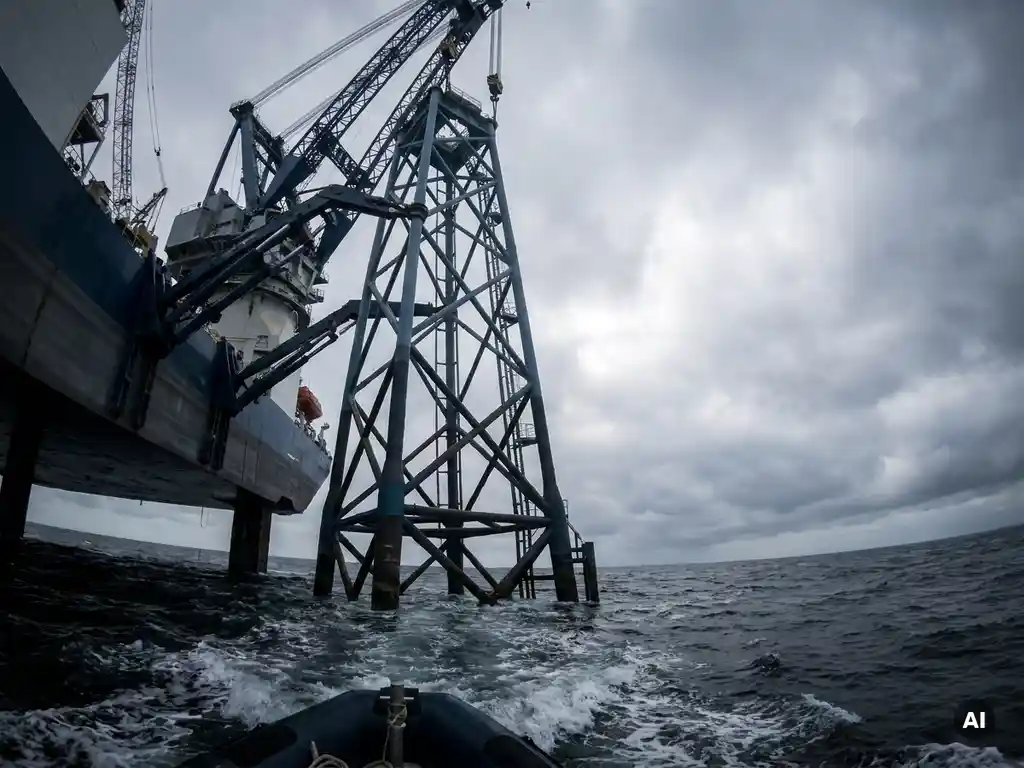
Reliable hydraulics are the backbone of offshore wind installation because every major operation, from jacking up the vessel to lifting turbine components at sea, depends on hydraulic systems that perform without interruption under extreme conditions. A single hydraulic failure can halt an installation campaign, expose personnel to risk, and generate costs that dwarf the price of the system itself. The sections below answer the key technical questions engineers and project managers ask when specifying, designing, or operating hydraulic systems for offshore wind.
What makes hydraulic systems so demanding in offshore wind environments?
Offshore wind environments impose a combination of mechanical, thermal, and chemical stresses that few other industries match. Salt spray accelerates corrosion on every exposed surface, wave-induced vessel motion creates continuous dynamic loading, ambient temperatures swing from sub-zero winters to summer heat, and the systems must operate continuously across installation campaigns that run for months without the option of a quick workshop repair.
Beyond the environmental aggression, the power density requirements are severe. Jack-up legs, monopile grippers, hydraulic winches, and active heave compensation systems all demand high-flow, high-pressure hydraulic power, often simultaneously. A typical offshore wind installation vessel runs multiple large hydraulic power units (HPUs) in parallel to meet peak demand, and each unit must sustain rated output without overheating in an enclosed machinery space with limited ventilation.
Fluid contamination is another persistent challenge. Seawater ingress, micro-particulate wear debris, and the thermal degradation of hydraulic fluid all reduce system reliability over time. Tight filtration standards and robust fluid condition monitoring are not optional extras in this environment; they are baseline requirements for keeping an offshore hydraulic power pack operational throughout an installation season.
How do hydraulic systems control jack-up vessel leg operations?
Jack-up vessel leg operations are controlled by large hydraulic cylinders or rack-and-pinion drives powered by dedicated offshore hydraulic power units. The hydraulic system raises and lowers each leg independently, allowing the vessel to achieve a precise, level platform above the waterline before turbine installation begins. Synchronized multi-leg control is managed electronically, with the HPU supplying constant high-pressure flow to maintain position under variable seabed loading.
The loads involved are enormous. Each leg must support a fraction of the vessel’s total weight, which can exceed several thousand tonnes for a modern installation jack-up, while resisting horizontal forces from wind and current. The hydraulic cylinders or drive units must therefore hold position under sustained static load without pressure creep, which demands high-integrity valve blocks, leak-free manifolds, and pressure-holding logic that responds instantly to any deviation.
Redundancy is built into well-engineered jacking systems at every level: dual HPUs, bypass valves, accumulator banks that can maintain pressure during a pump fault, and independent control circuits for each leg. This architecture ensures that a component failure in one part of the system does not cause an uncontrolled leg movement, an event that could destabilize the vessel and endanger both crew and the turbine structure being installed.
What is active heave compensation and why does it depend on hydraulics?
Active heave compensation (AHC) is a real-time control system that cancels the vertical motion of a vessel caused by wave action, keeping a suspended load, such as a turbine blade, nacelle, or monopile, stationary relative to the seabed or installation target while the vessel moves beneath it. It depends on hydraulics because only hydraulic actuators can deliver the combination of force, speed, and controllability that AHC requires at offshore installation scale.
The principle is straightforward: sensors measure vessel heave in real time, a control system calculates the required corrective stroke, and hydraulic cylinders or a hydraulic winch drive extend or retract at the exact rate needed to keep the load position constant. The response time must be measured in milliseconds, and the forces involved can reach hundreds of tonnes. Electric drives cannot match the power-to-size ratio and response speed of hydraulic actuators at these load levels.
Energy efficiency is a significant consideration in AHC system design. When the actuator moves in the direction of the load, it can recover energy rather than dissipate it, a function that advanced hydraulic AHC architectures handle through regenerative circuits and accumulator storage. Our HeaveCom system, for example, achieves energy savings of up to 85% compared to conventional heave compensation approaches, which reduces both operating costs and the thermal load on the HPU during long installation windows.
For a broader view of the hydraulic solutions used across offshore installation and marine operations, see our work on hydraulic systems for offshore wind.
What happens when hydraulics fail during turbine component installation?
A hydraulic failure during turbine component installation typically forces an immediate operational halt. If the failure affects the heave compensation system, the suspended load becomes uncontrolled relative to the vessel, creating a collision risk with the transition piece, monopile, or installation tooling. If the jacking system is affected, the vessel may need to abort the installation position entirely. In either case, the consequences extend well beyond the cost of the failed component.
The direct costs of a hydraulic failure offshore are substantial. Vessel day rates for modern installation jack-ups run into hundreds of thousands of euros per day. A failure that requires a part to be sourced from shore, transported by crew transfer vessel, and installed by a specialist technician can idle the vessel for 24 to 72 hours or longer, depending on the component and weather window. Multiply that by a campaign with a tight seasonal installation schedule and the financial impact becomes significant.
Beyond cost, there are safety implications. A loss of hydraulic control over a multi-tonne component at sea creates risks for deck crew and for the structural integrity of the turbine foundation. This is why offshore hydraulic systems are designed with fail-safe valve configurations, load-holding functions, and redundant circuits, so that a single component failure results in a controlled, safe stop rather than an uncontrolled movement.
Condition monitoring plays a direct role in preventing these scenarios. Continuous pressure monitoring, temperature trending, and fluid cleanliness analysis allow engineers to detect developing faults before they become failures, reducing unplanned downtime in offshore hydraulic power units and drive systems. The hydraulic drive and control systems used in offshore wind must therefore integrate monitoring as a functional requirement, not an afterthought.
How do engineers design hydraulic systems for offshore wind reliability?
Engineers design hydraulic systems for offshore wind reliability by applying redundancy, environmental protection, and systematic failure mode analysis at every stage of the design process. The goal is a system that degrades gracefully under fault conditions rather than failing completely and that can be maintained or repaired on a vessel without specialist workshop facilities.
Redundancy and fail-safe architecture
Redundancy starts at the HPU level: offshore hydraulic power packs typically use multiple pumps in a duty/standby or load-sharing configuration so that a single pump failure does not interrupt supply. Critical valve functions use dual solenoids or spring-return fail-safe configurations so that a loss of electrical power results in a defined, safe hydraulic state. Accumulator banks provide short-term pressure reserves that allow controlled movement completion if the HPU trips during a critical phase of a lift.
Environmental and material specifications
All exposed components, manifold blocks, cylinder bodies, valve housings, and piping, are specified for marine environments. This typically means stainless steel or coated carbon steel for structural parts, high-grade seals rated for the full temperature range, and IP66 or higher enclosure ratings for electrical components integrated into the hydraulic system. Hydraulic fluid selection also matters: fire-resistant fluids are required in many offshore applications, and the fluid must maintain stable viscosity across the operating temperature range to protect pump and valve clearances.
Thermal management and filtration
Heat generation in a large offshore hydraulic power unit is significant, particularly during sustained high-flow operations like jacking or active heave compensation. Adequate cooler sizing, bypass thermostats, and temperature monitoring protect the fluid and the components. Filtration is specified to the cleanliness levels required by the most sensitive component in the circuit, typically a proportional valve or servo valve in an AHC system, and filter condition is monitored continuously to prevent bypass without detection.
What certifications and standards apply to offshore wind hydraulic systems?
Offshore wind hydraulic systems must comply with a combination of international maritime standards, classification society rules, and project-specific engineering requirements. The applicable framework depends on whether the system is installed on a vessel, a fixed foundation, or an installation tool, but several requirements apply broadly across the sector.
Classification societies such as DNV, Bureau Veritas, and Lloyd’s Register publish rules for hydraulic systems on offshore vessels and jack-up units. These rules cover design pressure ratings, material specifications, testing procedures, safety valve requirements, and documentation standards. Hydraulic systems on classed vessels must be approved by the relevant society’s surveyors during design review and again during commissioning, which means the engineering documentation, including hydraulic schematics, component datasheets, and test protocols, must be prepared to a standard that supports formal approval.
ISO standards provide the technical baseline for component and system performance. ISO 4413 (hydraulic fluid power: general rules relating to systems) is the primary reference for system design safety, covering topics including pressure relief, fluid containment, labelling, and commissioning requirements. Component-level standards such as those covering hydraulic cylinders, pumps, and valves feed into the overall system compliance picture.
For manufacturers and service providers, quality management certification is a prerequisite for offshore wind supply chains. ISO 9001 provides the baseline quality management framework, and many offshore wind projects additionally require suppliers to demonstrate compliance with project-specific quality plans and inspection and test plans (ITPs). Working within a certified quality management system ensures that design, production, and testing processes are documented, traceable, and auditable, requirements that classification societies and offshore wind developers both expect from hydraulic system suppliers.
How we support hydraulic systems for offshore wind installation
We design, engineer, and supply complete hydraulic systems for offshore wind installation vessels and equipment, with a track record that spans jack-up jacking systems, active heave compensation, hydraulic winch drives, and monopile gripper systems. Our work covers the full project lifecycle, from initial concept and hydraulic system design through production, commissioning, and long-term service support.
- Engineering and development of hydraulic drive and control systems for offshore installation applications, including jack-up leg systems, AHC systems, and hydraulic winches.
- Design and production of offshore hydraulic power units and custom HPU solutions, sized and specified for continuous duty in marine environments.
- Monopile gripper and installation tooling hydraulics, designed to classification society requirements and compatible with project-specific operational envelopes.
- Maintenance, overhaul, and repair of hydraulic cylinders, pumps, motors, and complete offshore hydraulic power packs, supported from our facilities in the Netherlands.
- Technical support, installation, commissioning, and field service for hydraulic systems throughout an installation campaign or vessel lifecycle.
Do you want to improve the reliability of your hydraulic systems, reduce unplanned downtime, or develop a new hydraulic installation for an offshore wind project? Explore the hydraulic systems and custom solutions we offer for offshore and marine applications, or discuss your hydraulic challenge with our specialists to find the right technical approach for your project.